Self-propelled Articulating Boom Lifts Diesel/DC mobile aerial platform boom lift
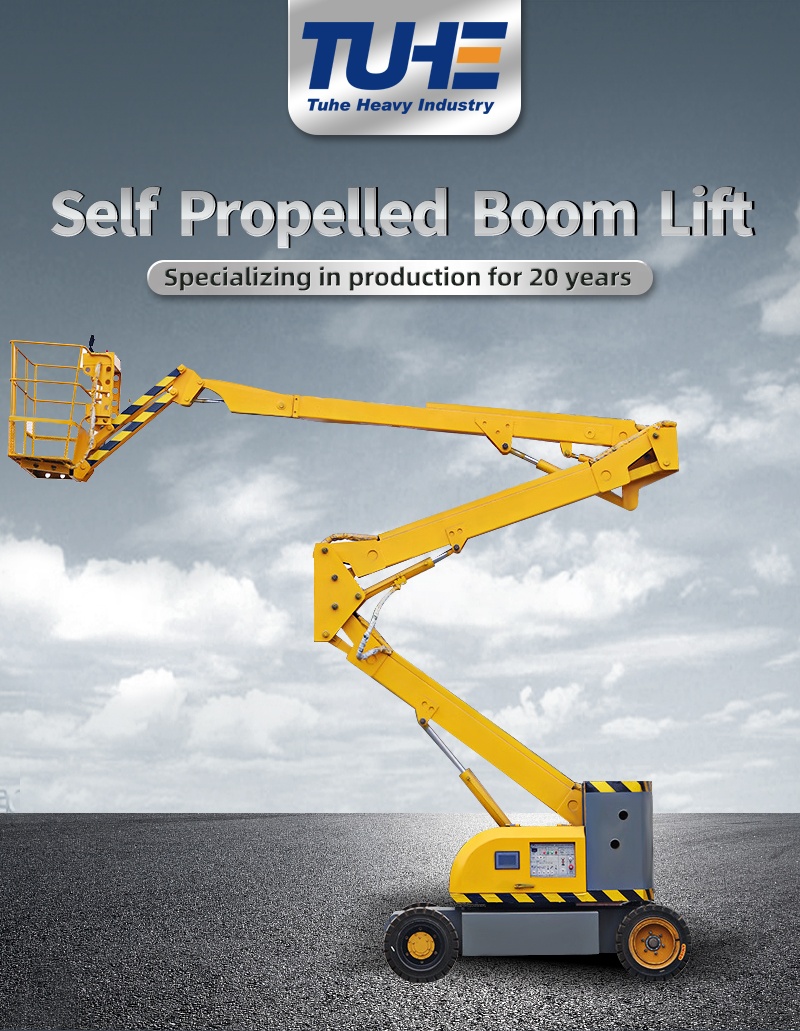
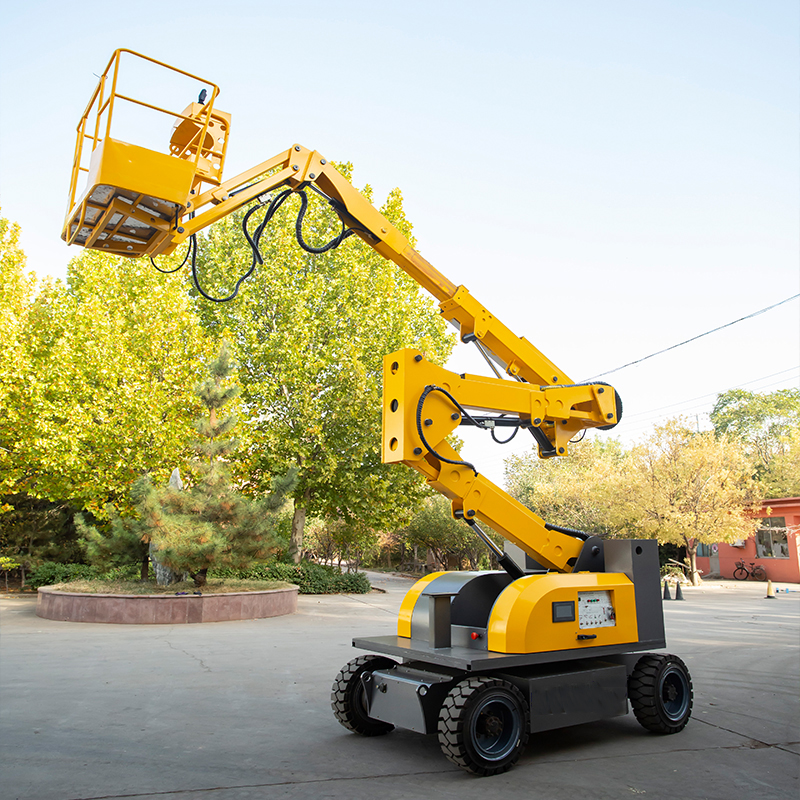
A 20m self-propelled articulating boom lift is one of the most versatile aerial work platforms (AWPs) used in construction, industrial maintenance, facility management, shipyards, airports, warehouses, and municipal engineering. Unlike straight boom lifts or scissor lifts, an articulating boom lift features multiple hinged sections that allow operators to reach up, over, and around obstacles while maintaining excellent stability.
Modern 20-meter articulating boom lifts are available with diesel, DC electric, or hybrid power systems, making them suitable for both indoor and outdoor applications. Whether you need to maintain a factory roof, install steel structures, repair electrical systems, or perform tree trimming, this equipment significantly improves safety and productivity.
This guide explains everything international buyers should know before purchasing a 20m articulating boom lift from a professional Chinese manufacturer.
What Is a 20m Self-Propelled Articulating Boom Lift?
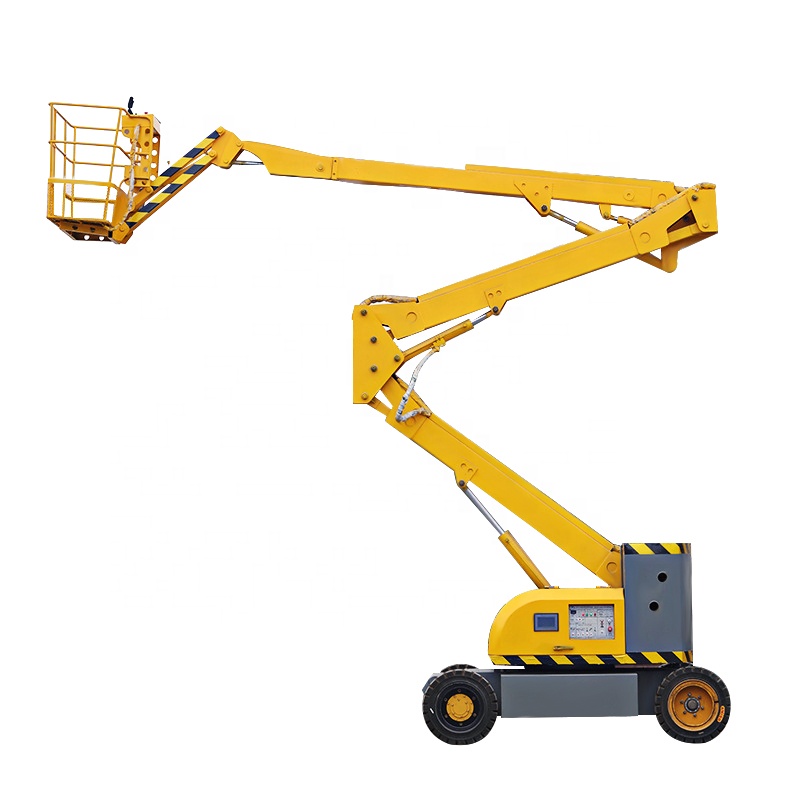
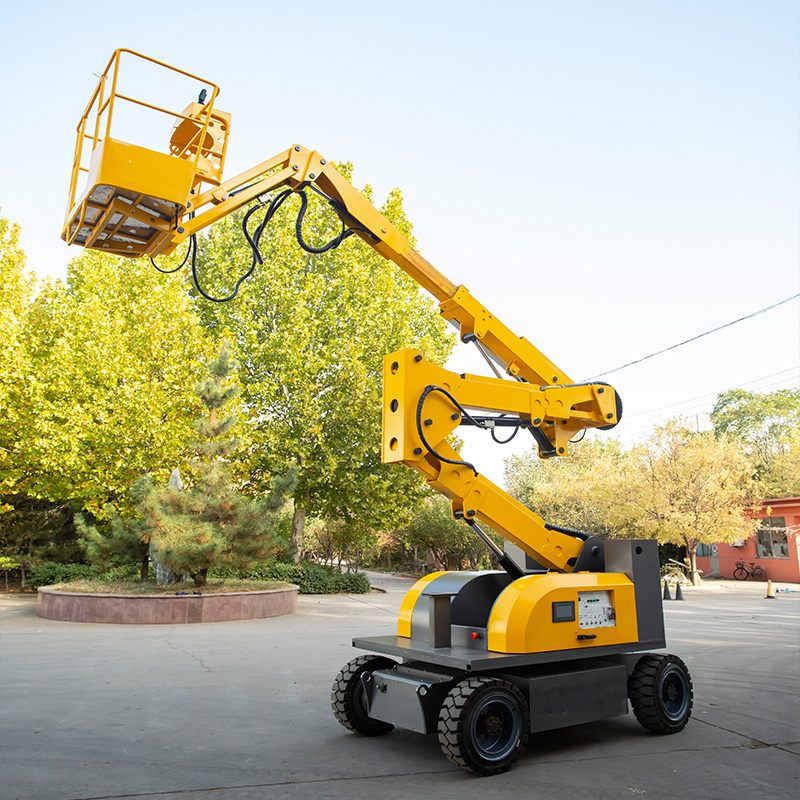
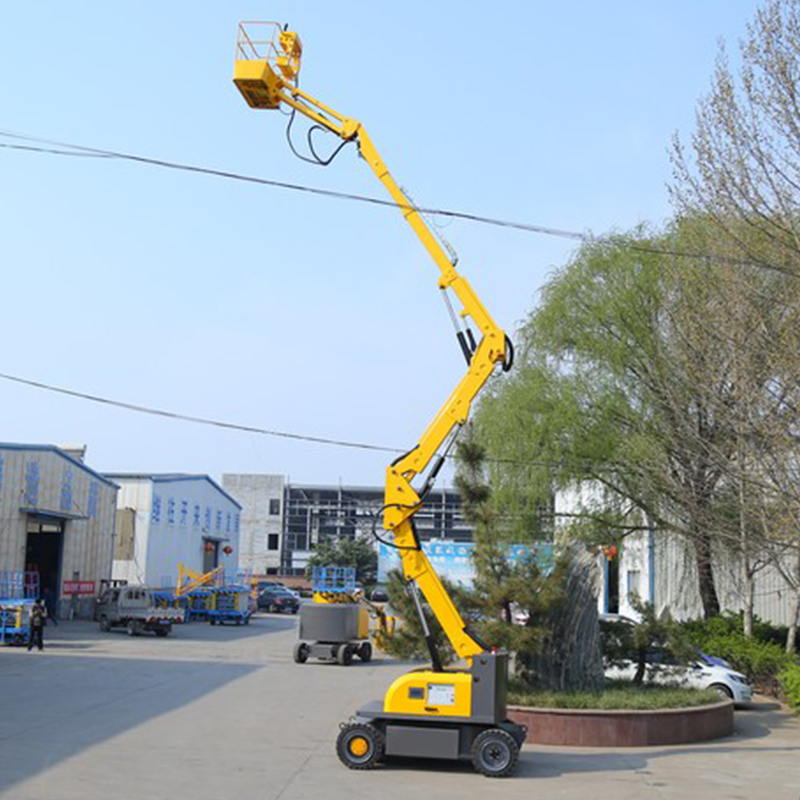
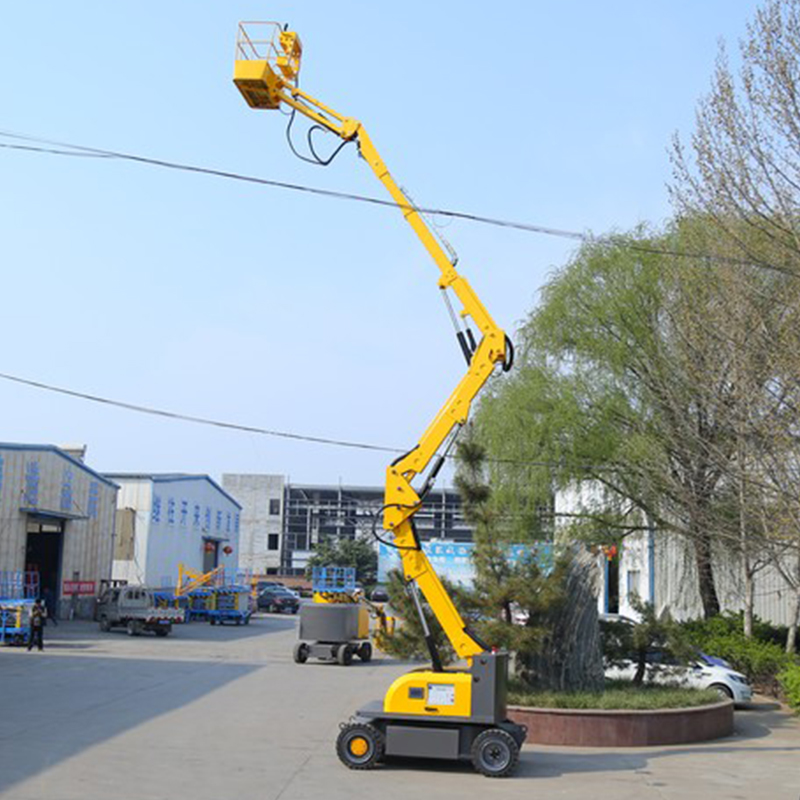
A 20m self-propelled articulating boom lift is a mobile aerial platform capable of lifting operators to approximately 20 meters (65-66 feet) of working height.
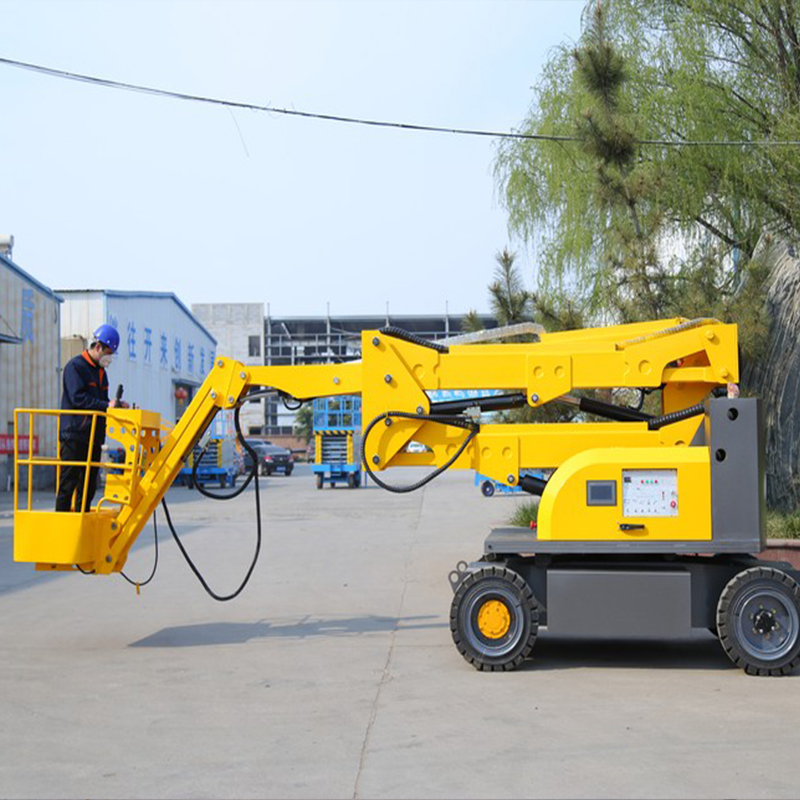
Unlike trailer-mounted boom lifts that require towing, self-propelled models can drive while elevated (depending on safety conditions), reducing repositioning time and increasing jobsite efficiency.
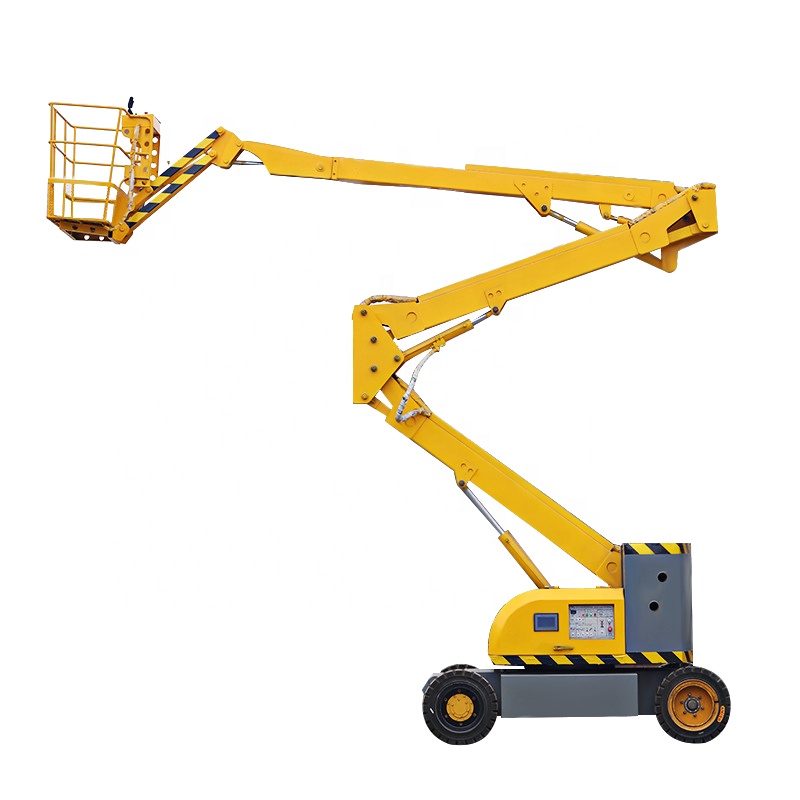
The articulating design consists of multiple boom sections connected by hydraulic joints, allowing the platform to:
Reach over walls
Bypass machinery
Access confined areas
Work around pipelines
Reach difficult roof structures
Typical Specifications:
| Item | Typical Specification |
|---|---|
| Working Height | 20 m |
| Platform Height | 18 m |
| Horizontal Outreach | 11–13 m |
| Platform Capacity | 230–260 kg |
| Platform Rotation | 180° |
| Turntable Rotation | 360° Continuous |
| Maximum Gradeability | 35–45% |
| Driving Speed | 5–6 km/h |
| Weight | 9,000–11,500 kg |
self-propelled boom lift is more flexible and convenient to control the movement of the device on the platform.
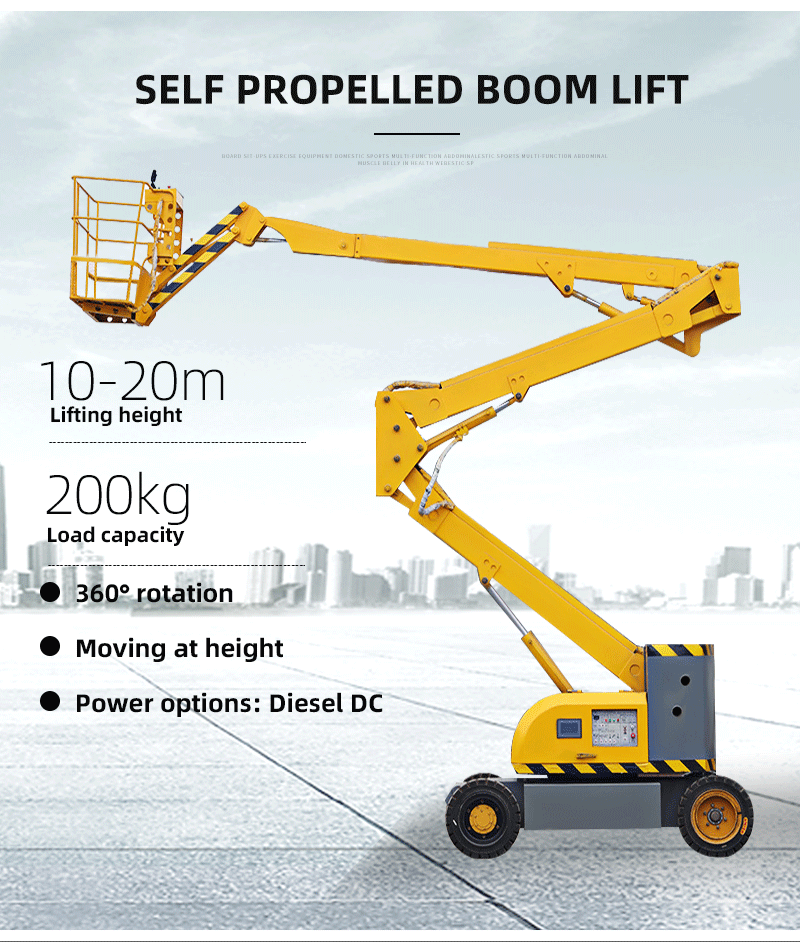
The boom lift height ranges from 10 meters to 20 meters, and the load reaches 200 kg, which can be used for two workers to work on the platform at the same time.
Diesel vs DC Electric Models
Manufacturers generally offer two power configurations.
Diesel Articulating Boom Lift
Ideal for:
Construction sites
Mining
Bridges
Wind farms
Road maintenance
Ports
Advantages:
High torque
Long operating hours
Fast refueling
Excellent climbing ability
Suitable for rough terrain
DC Electric Boom Lift
Ideal for:
Warehouses
Shopping malls
Airports
Hospitals
Exhibition centers
Food factories
Advantages:
Zero emissions
Low operating noise
Lower maintenance costs
Environmentally friendly
Suitable for indoor use
Many manufacturers now also provide hybrid diesel-electric models, combining long outdoor runtime with indoor electric operation.
Main Components of a 20m Articulating Boom Lift
A quality aerial work platform depends on premium hydraulic, electrical, and structural components.
1. Chassis
Heavy-duty welded steel frame designed for maximum stability.
Features include:
Four-wheel drive (optional)
Oscillating axle
Non-marking tires
Foam-filled tires
Rough terrain tires
2. Articulating Boom Assembly
The boom consists of several hydraulic sections connected with reinforced pivot pins.
Benefits:
Flexible movement
High rigidity
Precise positioning
Long service life
3. Hydraulic System
The hydraulic system controls:
Boom lifting
Extension
Steering
Platform leveling
Rotation
Key components include:
Hydraulic cylinders
Oil tank
Pumps
Valves
Hydraulic hoses
Pressure sensors
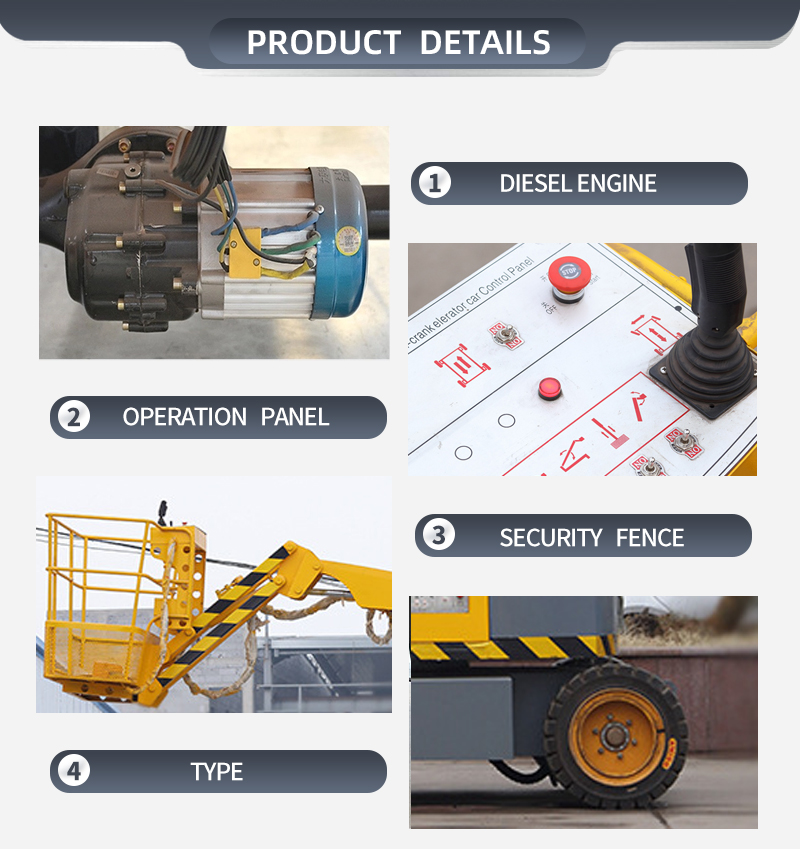
4. Diesel Engine or Electric Drive System
Diesel models commonly use reliable industrial engines from globally recognized suppliers.
Electric models generally include:
AC drive motors
DC motors
Maintenance-free batteries
Intelligent battery management system
Integrated charger
5. Platform Basket
Typical dimensions:
1.8 m × 0.8 m
Platform features:
Foldable guardrails
Anti-slip floor
Safety harness anchor points
Control console
Emergency stop switch
6. Rotation System
High-quality slewing bearings allow:
Smooth 360° rotation
Precise positioning
Reduced mechanical wear
7. Electronic Control System
Modern boom lifts feature intelligent controllers capable of monitoring:
Boom angle
Load
Speed
Battery condition
Hydraulic pressure
Safety alarms
8. Safety Devices
Professional manufacturers integrate numerous safety systems:
Emergency lowering
Tilt alarm
Overload protection
Automatic leveling
Emergency stop
Anti-crushing protection
Fault diagnosis system
Platform overload sensor
Travel alarm
Flashing beacon
How Does a Self-Propelled Articulating Boom Lift Work?
The operating principle combines hydraulic transmission with electronic control.
Step 1
The operator starts the diesel engine or electric motor.
Step 2
The hydraulic pump generates oil pressure.
Step 3
Hydraulic cylinders extend the articulated boom sections.
Step 4
Multiple joints rotate simultaneously, allowing the platform to bypass obstacles.
Step 5
The proportional control system enables smooth movement in every direction.
Step 6
The automatic leveling mechanism keeps the platform horizontal even while the boom changes position.
Step 7
The self-propelled drive system allows movement between work locations without lowering the platform (subject to machine limits and site safety requirements).
Typical Applications
The 20m articulating boom lift serves many industries.
Construction
Steel installation
Curtain wall installation
Building maintenance
Concrete inspection
Industrial Plants
Equipment maintenance
Pipe installation
Machine repair
Overhead crane servicing
Municipal Engineering
Street lighting
Traffic signals
CCTV installation
Tree pruning
Warehouses
High-rack maintenance
Lighting replacement
Fire sprinkler inspection
Airports
Terminal maintenance
Hangar work
Signage installation
Shipbuilding
Hull painting
Welding
Electrical installation
Power Industry
Transformer maintenance
Cable installation
Wind turbine inspection
Major Advantages
Outstanding Reach
Articulating booms access locations impossible for scissor lifts.
Excellent Obstacle Clearance
The multi-joint structure allows operators to work above machinery and obstacles.
Higher Productivity
Self-propelled movement minimizes repositioning and downtime.
Enhanced Safety
Integrated safety systems reduce operator risk compared with ladders and scaffolding.
Lower Labor Costs
One machine can often replace multiple ladders or scaffolding setups.
Flexible Power Options
Choose diesel, battery-electric, or hybrid depending on the work environment.
Strong Return on Investment
Although the initial investment is higher than some alternatives, faster job completion and reduced labor costs often deliver long-term savings.
The whole machine has simple structure, reliable safety and more convenient operation.
he device is powered by a high-efficiency battery pack and can be charged through a standard power socket.
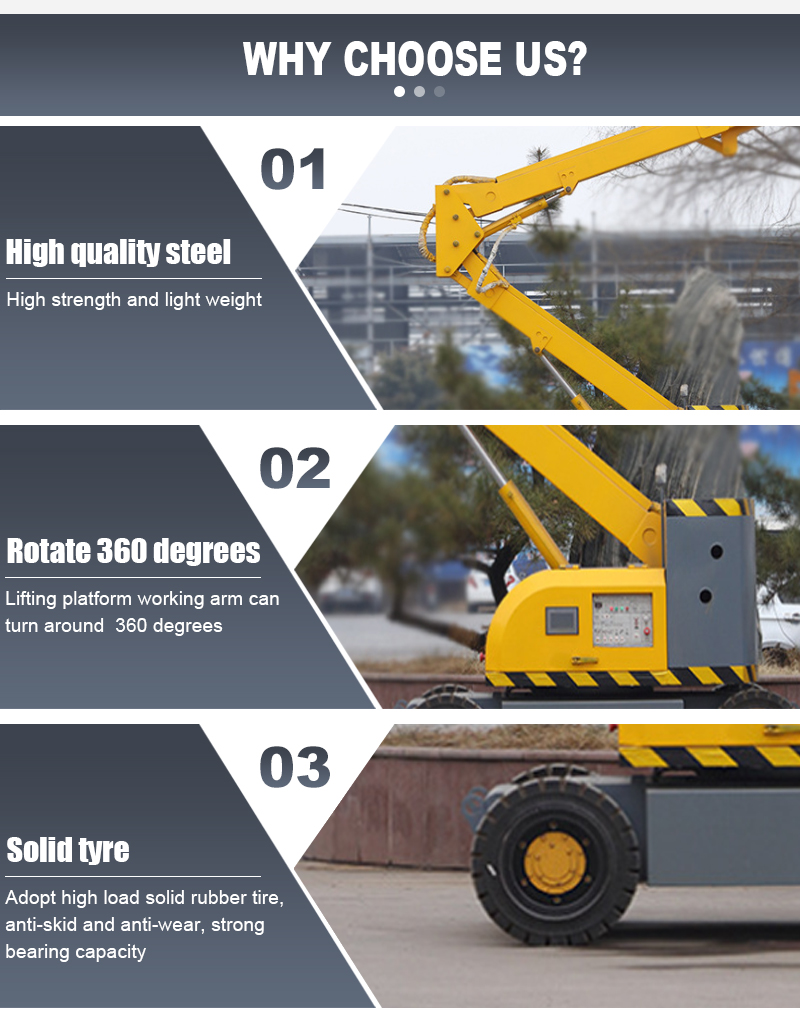
All models can be moved flexibly. Good working performance and narrow chassis width are conducive to the equipment entering the narrow industrial passages and crowded working areas.
Common Pain Points Solved
Many elevated work environments present access challenges that conventional equipment cannot address.
| Customer Challenge | Boom Lift Solution |
|---|---|
| Cannot reach over obstacles | Multi-joint articulated boom |
| Frequent equipment repositioning | Self-propelled travel system |
| Limited indoor access | DC electric model |
| Outdoor rough terrain | Diesel 4WD chassis |
| Unsafe ladder work | Enclosed operator platform |
| High scaffolding costs | Rapid deployment |
| Difficult maintenance locations | Long horizontal outreach |
Competitor Comparison
Articulating Boom Lift vs Scissor Lift
| Feature | Boom Lift | Scissor Lift |
|---|---|---|
| Vertical Reach | Excellent | Excellent |
| Horizontal Reach | Excellent | None |
| Reach Over Obstacles | Yes | No |
| Compact Indoor Work | Good | Excellent |
| Outdoor Rough Terrain | Excellent | Good |
| Flexibility | Very High | Moderate |
Articulating Boom Lift vs Telescopic Boom Lift
| Feature | Articulating | Telescopic |
|---|---|---|
| Obstacle Clearance | Excellent | Poor |
| Straight Reach | Moderate | Excellent |
| Precision Positioning | Excellent | Good |
| Building Maintenance | Excellent | Good |
| Open Construction Sites | Good | Excellent |
Articulating Boom Lift vs Trailer Boom Lift
| Feature | Self-Propelled | Trailer Mounted |
|---|---|---|
| Mobility | Excellent | Requires towing |
| Jobsite Efficiency | High | Moderate |
| Setup Time | Short | Longer |
| Productivity | Higher | Lower |
Expected Service Life
The lifespan depends on maintenance quality and operating conditions.
Typical expectations include:
Structural frame: 15–20 years
Boom assembly: 12–18 years
Hydraulic cylinders: 8–12 years
Hydraulic hoses: 3–6 years
Diesel engine: 8,000–12,000 operating hours with proper maintenance
Electric batteries (lithium): 2,500–4,000 charge cycles (depending on battery type and usage)
Electronic controllers: 10+ years
Routine preventive maintenance—including lubrication, hydraulic oil replacement, filter changes, and scheduled inspections—can significantly extend equipment life.
Optional Configurations
Manufacturers can customize machines with:
Four-wheel drive
Four-wheel steering
Foam-filled tires
Non-marking tires
Lithium battery packs
Hydraulic generator
AC power outlet on the platform
Cold-weather package
High-temperature package
Explosion-proof electrical configuration
Telematics and GPS fleet management
Automatic lubrication system
Custom Manufacturing Process
Professional Chinese OEM manufacturers usually follow these steps:
Step 1: Requirement Analysis
Customers provide:
Working height
Load capacity
Indoor or outdoor application
Power source preference
Required certifications
Destination country
Step 2: Engineering Design
Engineers prepare:
Technical drawings
Configuration proposal
Performance calculations
Optional accessories
Step 3: Production
Manufacturing includes:
CNC cutting
Robotic welding
Shot blasting
Powder coating or industrial painting
Hydraulic assembly
Electrical wiring
Step 4: Quality Inspection
Each machine undergoes:
Static load testing
Dynamic load testing
Hydraulic pressure testing
Stability verification
Driving performance testing
Safety function inspection
Step 5: Packaging
Options include:
Steel frame packaging
Container loading
Ro-Ro shipping
Flat rack transportation
Step 6: After-Sales Support
Reliable suppliers provide:
Spare parts supply
Online technical support
Maintenance manuals
Operator training
Warranty service
Why Buy from a Chinese Manufacturer?
China has become one of the world's largest producers of aerial work platforms due to its mature manufacturing ecosystem.
Key advantages include:
Competitive factory-direct pricing
OEM and private-label manufacturing
CE, ANSI, and other international certification options
Large production capacity
Fast delivery schedules
Comprehensive spare parts support
Flexible customization for global distributors and rental fleets
For importers, selecting an experienced manufacturer with proven quality control, certified components, and responsive after-sales service is just as important as comparing prices.
Conclusion
A 20m self-propelled articulating boom lift is an efficient, safe, and highly versatile solution for working at height in complex environments. Its articulated boom structure, self-propelled mobility, and available diesel or DC electric power options make it suitable for construction, industrial maintenance, municipal projects, logistics, aviation, and many other sectors.
When choosing a supplier, evaluate more than just the purchase price. Consider structural design, hydraulic system quality, safety features, component brands, customization capabilities, certification compliance, spare parts availability, and long-term service support. A well-built articulating boom lift from a reputable manufacturer can provide years of reliable performance while improving productivity and reducing operating costs.


222.webp)