


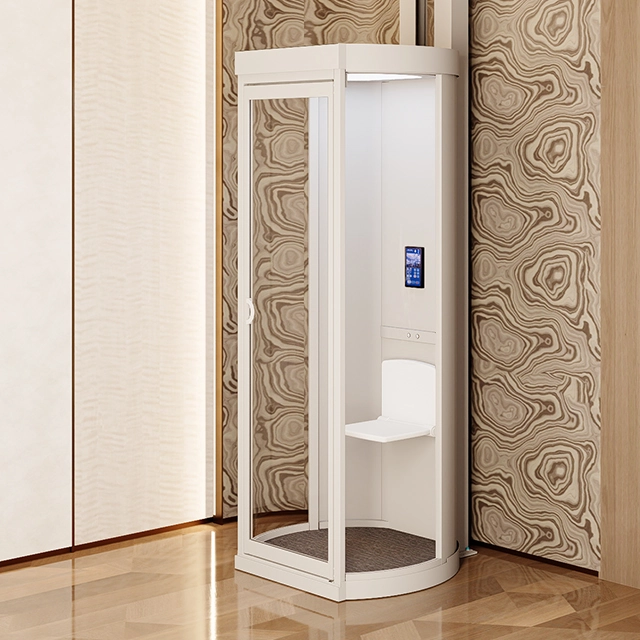
As populations age and accessibility regulations become increasingly important, more homeowners, architects, hospitals, nursing homes, and commercial property developers are investing in compact vertical wheelchair lifts. An Aluminum Hydraulic Home Elevator Vertical Wheelchair Disabled Lift is one of the most practical accessibility solutions available today, combining a compact footprint, smooth hydraulic lifting system, durable aluminum structure, and simple installation without requiring a traditional elevator shaft.
Compared with conventional passenger elevators, hydraulic wheelchair lifts are significantly more affordable, consume less installation space, and require minimal civil construction. They are specifically designed to provide safe vertical transportation for wheelchair users, elderly individuals, and people with reduced mobility.
As a professional manufacturer, Tuhe Lift supplies customized aluminum hydraulic wheelchair lifts for residential, commercial, and public accessibility projects worldwide, offering OEM and ODM solutions that comply with international safety standards.
What Is an Aluminum Hydraulic Home Elevator Vertical Wheelchair Lift?
An aluminum hydraulic home elevator is a low-rise vertical lifting platform designed to transport passengers, wheelchairs, mobility scooters, and caregivers safely between different floor levels.
Unlike traditional traction elevators that require machine rooms and deep elevator shafts, this lift uses a hydraulic cylinder lifting system combined with a lightweight yet high-strength aluminum frame. The modular structure allows quick installation while reducing construction costs.
These lifts are ideal for travel heights ranging from 1 meter to 12 meters, making them suitable for homes, villas, duplex apartments, schools, churches, clinics, shopping centers, and public buildings.
The hydraulic drive system ensures smooth acceleration and deceleration, providing a comfortable riding experience with low operating noise and excellent stability.
Typical Technical Specifications
The following specifications are based on the Tuhe JFH/G-550 model.
| Item | Specification |
|---|---|
| Model | JFH/G-550 |
| Maximum Lift Height | 5,500 mm |
| Maximum Working Height | 6,550 mm |
| Rated Capacity | 320 kg |
| Passenger Capacity | 1 Wheelchair + 1 Caregiver |
| Platform Size | 1000 × 1400 mm (Customizable) |
| Overall Size | 1300 × 1400 mm (Customizable) |
| Machine Weight | Approximately 2,000 kg |
| Power Supply | 220V 50Hz Single Phase |
| Drive Type | Hydraulic Cylinder |
| Structure Material | High-strength Aluminum Alloy |
| Control Voltage | 24V Safety Control |
| Installation | Indoor or Outdoor |
Optional lifting heights include:
1.5 m
2 m
3 m
4 m
5.5 m
7 m
9 m
12 m
Higher customized lifting heights are also available according to project requirements.

For this hydraulic wheelchair type elevator,There will be a fixed ramp, for users easy coming in and out.In this way, it no need dig a pit,Beautiful apperance, stable lifting stable row,save space Full-Stroke anti-drop system with high safety factor,We add a safety touch panel under the 2 platform.Once the safety touch panel hits the obstacle during the descent, it immediately stops power and stops faling,thus eliminatiing the potential danger
Main Components and Accessories
Each Tuhe hydraulic wheelchair lift is manufactured using premium components selected for reliability and long service life.
Aluminum Lift Structure
The frame is fabricated from industrial-grade aluminum alloy, offering several advantages:
Lightweight construction
Excellent corrosion resistance
High structural strength
Modern appearance
Low maintenance
Compared with painted steel, aluminum does not rust, making it particularly suitable for outdoor installations and humid environments.
Hydraulic Power Unit
The hydraulic station consists of:
Hydraulic pump
Electric motor
Oil tank
Pressure valve
Hydraulic cylinder
Oil filter
Solenoid valves
The hydraulic system provides stable lifting with minimal vibration and operating noise, typically below 65 dB, making it suitable for residential use.
Hydraulic Cylinder
The precision hydraulic cylinder converts hydraulic pressure into vertical lifting force.
Features include:
Heavy-duty chrome piston
High-pressure seals
Leak-resistant design
Long service life
Premium sealing technology minimizes oil leakage and maintenance.
Platform
The platform is designed for wheelchair accessibility and passenger comfort.
Optional configurations include:
Anti-slip flooring
Aluminum checker plate
Stainless steel platform
Foldable access ramp
Automatic platform gate
Customized platform dimensions
Control System
The intelligent electrical control system includes:
Call buttons
Platform control panel
Emergency stop
Key switch
Automatic leveling
Digital fault diagnosis
Some models support remote monitoring and wireless control.
Safety Accessories
Safety is the highest priority in accessibility equipment.
Standard safety devices include:
Emergency lowering system
Emergency stop button
Hydraulic hose burst valve
Safety limit switches
Automatic door interlock
Overload protection
Anti-fall safety mechanism
Obstruction detection
Non-slip platform surface
Battery backup (optional)
These features ensure reliable operation under various conditions.
Working Principle
The hydraulic wheelchair lift operates using hydraulic fluid pressure.
The lifting process follows these steps:
The passenger enters the platform.
Safety doors are automatically locked.
The operator presses the destination button.
The electric motor drives the hydraulic pump.
Hydraulic oil is pressurized.
The hydraulic cylinder extends.
The platform rises smoothly.
Upon reaching the destination floor, the system automatically levels the platform.
The safety gate unlocks, allowing passengers to exit safely.
When descending, hydraulic oil returns to the reservoir through precision control valves, ensuring a smooth and controlled lowering speed.
Compared with traction elevators, hydraulic systems provide softer starts and stops, enhancing passenger comfort.


Typical Applications
The aluminum hydraulic wheelchair lift is widely used in both residential and commercial environments.
Residential Homes
Perfect for:
Villas
Duplex houses
Townhouses
Multi-story residences
It enables elderly family members and wheelchair users to move independently between floors.
Nursing Homes
Care facilities install wheelchair lifts to improve accessibility for residents with limited mobility.
Benefits include:
Enhanced safety
Reduced caregiver workload
Faster patient transportation
Hospitals and Clinics
Healthcare facilities use wheelchair lifts for:
Patient transport
Rehabilitation centers
Outpatient clinics
Medical offices
Hydraulic operation ensures quiet performance, creating a more comfortable environment for patients.
Schools
Accessibility regulations often require barrier-free access for students and visitors with disabilities.
Wheelchair lifts provide a practical and cost-effective solution for low-rise educational buildings.
Shopping Centers
Retail buildings install wheelchair lifts to comply with accessibility standards while improving the customer experience.
Churches, Libraries, and Museums
Public buildings frequently use compact hydraulic lifts where traditional elevators are impractical due to limited space or historic architecture.
Problems It Solves
Improves Accessibility
Millions of people worldwide experience mobility challenges due to age, injury, or disability. A vertical wheelchair lift removes architectural barriers, allowing users to travel independently and safely between floors.
Eliminates Stair Hazards
Falls on stairs are a leading cause of injury among older adults. A hydraulic lift significantly reduces the risk of accidents by providing a stable and secure means of vertical transportation.
Saves Construction Costs
Unlike conventional elevators, hydraulic wheelchair lifts generally require:
No deep pit
No overhead machine room
Minimal structural modifications
This reduces installation costs and shortens project timelines.
Maximizes Space Utilization
With compact dimensions, the lift can be installed in areas where standard passenger elevators cannot fit, making it ideal for existing buildings with limited space.
Three Types For You Choose From

Door Direction For You Choose From

Product Details

Installation Case


How to Use the Hydraulic Wheelchair Lift
Operating the lift is simple and user-friendly.
Step 1
Ensure the platform is at the desired floor and verify that the safety gate is open.
Step 2
Position the wheelchair or mobility scooter securely on the platform. If necessary, engage the wheelchair brakes.
Step 3
Close the safety gate completely. The lift will not operate until all safety interlocks are engaged.
Step 4
Press and hold the destination button. The hydraulic system will raise or lower the platform smoothly.
Step 5
Once the platform reaches the destination level and stops automatically, wait for the gate to unlock before exiting.
Step 6
After use, ensure the platform is clear and the lift is ready for the next operation.
Routine inspection of the platform, hydraulic system, and safety devices helps maintain reliable performance and extends service life.
Competitive Comparison
Hydraulic Wheelchair Lift vs Traction Home Elevator
| Feature | Hydraulic Lift | Traction Elevator |
|---|---|---|
| Installation Cost | Lower | Higher |
| Machine Room | Not Required | Usually Required |
| Shaft Requirement | Minimal | Full Shaft |
| Noise Level | Low | Moderate |
| Maintenance | Simple | More Complex |
| Best Application | Low-Rise Buildings | Multi-Story Buildings |
Hydraulic home lifts are particularly suitable for homes and buildings with travel heights under approximately 12 meters.
Hydraulic Wheelchair Lift vs Stair Lift
| Feature | Wheelchair Lift | Stair Lift |
|---|---|---|
| Wheelchair Compatible | Yes | No |
| Passenger Comfort | Excellent | Moderate |
| Installation Location | Indoor & Outdoor | Staircases Only |
| Capacity | Up to 320 kg | Typically 120–160 kg |
For wheelchair users, a vertical platform lift offers greater independence and convenience than a stair lift.
Hydraulic Wheelchair Lift vs Inclined Platform Lift
| Feature | Vertical Lift | Inclined Lift |
|---|---|---|
| Installation Complexity | Low | Higher |
| Space Occupancy | Compact | Occupies Staircase |
| Maintenance | Lower | Moderate |
| Accessibility | Excellent | Good |
Vertical lifts preserve staircase usability while providing efficient barrier-free access.
Customization Options from Tuhe Lift
Tuhe Lift provides comprehensive OEM and ODM customization services, including:
Lifting heights from 1–12 meters
Platform dimensions tailored to project requirements
Indoor or outdoor models
Stainless steel or aluminum finishes
Automatic or manual doors
Glass enclosure options
Custom colors and branding
Remote control systems
Battery backup for power outages
Weather-resistant designs for outdoor use
Multi-language control panels
Compliance with regional electrical standards
These flexible options allow distributors, contractors, and project developers to match the lift to local building codes and customer preferences.
Tuhe Lift After-Sales Service
Tuhe Lift is committed to providing dependable products and long-term customer support.
Our after-sales services include:
Comprehensive factory testing before shipment, including load, safety, and functional inspections
Installation guidance with detailed manuals, wiring diagrams, and video tutorials
Technical support from experienced engineers via email, phone, or online consultation
Spare parts supply for hydraulic pumps, cylinders, control systems, sensors, and electrical components
OEM and ODM support for distributors and brand owners
Warranty service covering manufacturing defects under standard warranty terms
Fast-response troubleshooting to minimize equipment downtime
Long-term maintenance advice to maximize service life and operating reliability
With advanced hydraulic technology, premium aluminum construction, flexible customization, and responsive after-sales support, the Tuhe Aluminum Hydraulic Home Elevator Vertical Wheelchair Disabled Lift delivers a safe, economical, and user-friendly accessibility solution for modern homes and public buildings. It offers smooth performance, low maintenance requirements, and excellent value, making it an ideal choice for projects that demand reliable barrier-free vertical transportation.
503.webp)


222.webp)