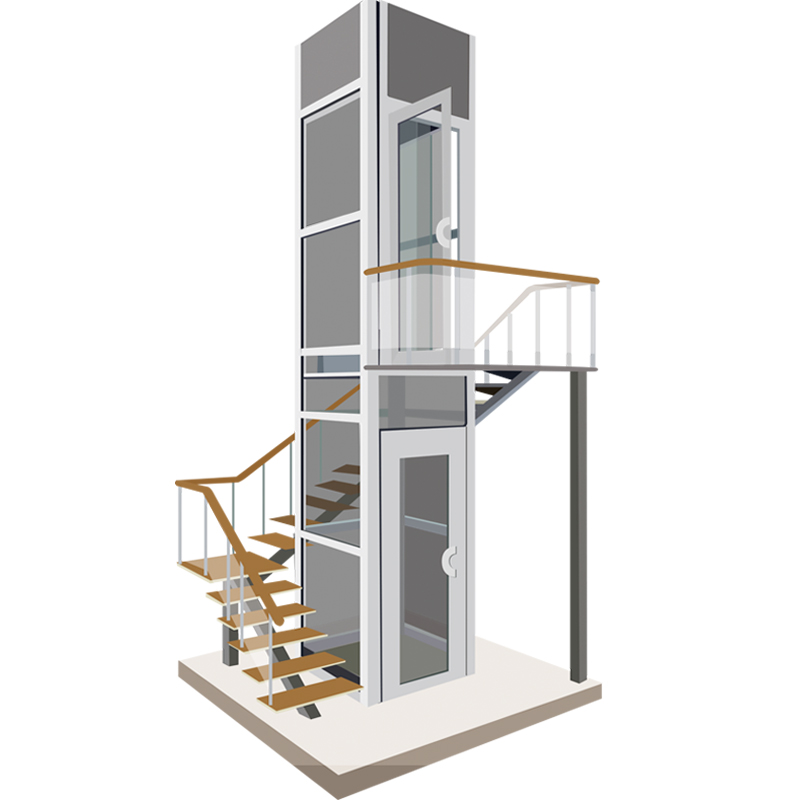
A home elevator has become an increasingly popular solution for villas, private houses, and multi-story residential buildings. With the development of residential elevator technology, homeowners now have several options, including hydraulic home elevators and screw-driven home elevators.
Both systems provide convenient vertical transportation inside a home, but they differ significantly in terms of installation requirements, comfort, noise level, maintenance, speed, and overall cost.
This guide explains the advantages and disadvantages of hydraulic home elevators and screw home elevators, helping homeowners understand which solution is more suitable for their residential needs.
What Is a Hydraulic Home Elevator?
A hydraulic home elevator is a residential lift system powered by hydraulic pressure. The hydraulic pump pushes oil into a cylinder, which moves a piston and lifts the elevator cabin.
Unlike traditional traction elevators, hydraulic elevators do not require a counterweight system. This makes them especially suitable for private homes where installation space is limited.
Hydraulic home elevators are widely used in villas, duplex houses, and low-rise residential buildings because of their smooth operation, reliable structure, and flexible installation options.
Advantages and disadvantages of hydraulic home elevator
A. Advantages of hydraulic elevator:
1. Hydraulic elevator has low requirements for civil structure
It doesn't need a machine room, and can be installed as long as the height of the top floor is at least 2000 mm. The foundation pit can be very shallow, no less than 100 mm or no need pit. Due to these advantages of hydraulic domestic elevator in civil engineering, it quickly occupied most of the domestic elevator market bacause it's economic and durable.
2. The hydraulic elevator will not exceed the speed limit and is easy to realize self rescue
If the mechanical structure design is reasonable and the installation is reliable, the safety factor of the hydraulic elevator is relatively high, and the hydraulic elevator can use the backup battery to realize the self rescue function of trapped people. When the elevator fails or is trapped by power failure, press the emergency button inside the car, connect the oil drain valve circuit, and the hydraulic oil slowly returns to the oil tank, the elevator will slow down by its own weight.
3. Hydraulic elevator can save building space
Hydraulic without counterweight device, only 2 tracks, minimum installation space only needs 1000 * 700mm size.
4. The hydraulic elevator is more economical, meets customer budget requirements, and is relatively simple to install
B. Disadvantages of hydraulic elevator:
Hydraulic elevators are faster than screw elevators, but not as fast as commercial elevators.
1. Lower Speed Than Commercial Elevators
Hydraulic home elevators are designed for residential use rather than high-rise buildings.
Their speed is generally lower than commercial traction elevators because residential elevators prioritize safety, comfort, and reliability rather than high-speed transportation.
For villas and houses with only a few floors, this speed limitation is usually not a major issue.
2. Hydraulic System Requires Regular Maintenance
The hydraulic system contains components such as:
Hydraulic oil
Oil seals
Hydraulic pump
Valves
Over long-term use, these parts require inspection and maintenance to ensure reliable performance.
Regular maintenance can help prevent oil leakage and maintain smooth operation.
What Is a Screw Home Elevator?
A screw home elevator, also called a screw-driven home lift, uses an electric motor to rotate a screw mechanism. The rotating screw moves the elevator cabin vertically through a nut system.
Unlike hydraulic elevators, screw elevators do not use hydraulic oil or cylinders.
Because of their unique mechanical structure, screw elevators are often selected for residential buildings where installation conditions are challenging.
Advantages and disadvantages of screw-type home elevators
A. Advantages of screw-type home elevators
1. Easy installation
Because its structure is relatively safe, there is no need for buffers, speed limiters and other devices, and there is no need to dig the elevator foundation pit during installation. It only needs to have a suitable height, and have a load-bearing ring beam. It can be installed on one wall.
2. Flexible structure
Its structure is relatively strong, so it can easily open the door at right angles, opposite the door, and open the door on three sides. Even this will not affect its stability, so its structure is relatively simple.
B. Disadvantages of screw-type home elevators
1. Make noise
Because the motor follows the platform, it is inevitable that it will produce some noise, which is likely to spread to our users' ears, but it may not be suitable for users with quiet obsessive-compulsive disorder.
2. The running speed is too slow
Because its mechanical structure is limited, so its running speed will not be too fast. Compared with other elevators, there will be a gap of - half, so it is not suitable for those users who are in a hurry.
3. Not suitable for high places
Because the height of the elevator is limited, it is not suitable for buildings with more than three floors, especially the screw elevator is rare in high-rise buildings.
To sum up: screw elevators and hydraulic elevators are more suitable for home use. If you consider noise, hydraulic elevators have more advantages. At the same time, the overall budget of hydraulic elevators is much lower than that of screw elevators, which can meet the needs of families.
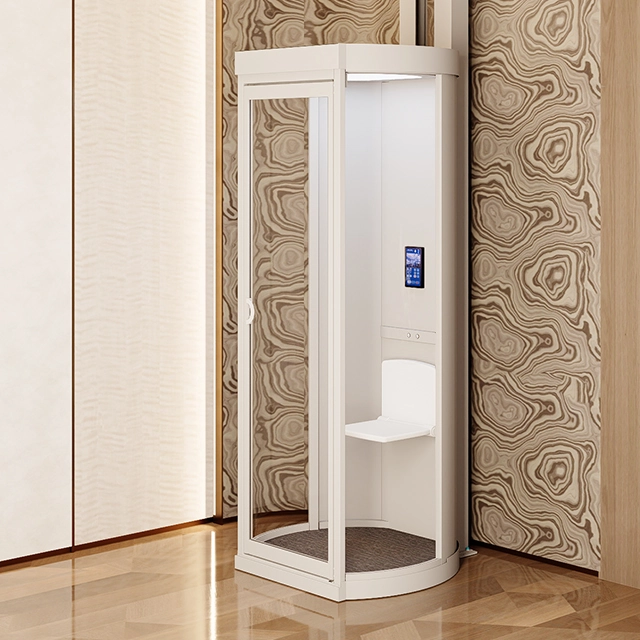
Hydraulic Home Elevator vs Screw Home Elevator: Detailed Comparison
Although both hydraulic elevators and screw elevators are suitable for residential applications, their technologies are different. Choosing the right system depends on factors such as home structure, available space, budget, noise requirements, and expected usage.
The following table provides a direct comparison between these two popular home elevator solutions.
| Comparison Item | Hydraulic Home Elevator | Screw Home Elevator |
|---|---|---|
| Driving System | Hydraulic pump and cylinder | Electric motor and screw mechanism |
| Installation Requirement | Low civil construction requirements | Very flexible installation |
| Machine Room | Not required in most designs | Not required |
| Pit Requirement | Shallow pit or optional pitless design | Usually no pit required |
| Space Requirement | Compact design without counterweight | Very compact structure |
| Running Comfort | Smooth and stable | Good but with more mechanical feeling |
| Noise Level | Lower operating noise | Higher mechanical noise |
| Running Speed | Faster than screw elevators | Generally slower |
| Maximum Travel Height | Suitable for multi-floor homes | More suitable for low-rise homes |
| Maintenance | Hydraulic system inspection required | Mechanical parts inspection required |
| Energy System | Uses hydraulic power unit | Uses electric motor |
| Cost | Usually more economical | Usually higher initial investment |
| Best Application | Villas, duplex houses, residential buildings | Space-limited homes and renovation projects |
Hydraulic Elevator vs Screw Elevator: Which Is More Comfortable?
Comfort is one of the most important considerations for residential elevator users.
A home elevator is used by family members every day, so smooth operation, quiet movement, and stable stopping performance directly affect the user experience.
Hydraulic Home Elevator Comfort
Hydraulic elevators are known for smooth movement.
The hydraulic system allows:
Gentle starting
Stable acceleration
Smooth stopping
Lower vibration
These characteristics make hydraulic elevators especially suitable for:
Elderly users
Families with children
Long-term residential use
Screw Home Elevator Comfort
Screw elevators also provide safe transportation, but the mechanical movement of the screw system can create noticeable operating sounds.
For some users, the mechanical sound is acceptable. However, homeowners who prefer a quiet living environment may prefer hydraulic technology.
Installation Comparison: Which Elevator Is Easier to Install?
Both hydraulic and screw home elevators have advantages when it comes to installation.
However, their strengths are different.
| Installation Factor | Hydraulic Elevator | Screw Elevator |
|---|---|---|
| Deep Pit Required | Usually not required or very shallow | Usually not required |
| Machine Room | Not required | Not required |
| Building Modification | Low | Very low |
| Suitable for Existing Houses | Yes | Yes |
| Installation Flexibility | High | Very high |
Screw elevators have a slight advantage in projects where construction work must be minimized.
However, hydraulic elevators remain one of the most popular choices because they combine simple installation with better comfort and performance.
Maintenance Comparison Between Hydraulic and Screw Home Elevators
Regular maintenance is essential for the safe operation of any home elevator.
Hydraulic Elevator Maintenance
Hydraulic elevators require attention to:
Hydraulic oil condition
Oil leakage inspection
Pump performance
Valve operation
Sealing components
With proper maintenance, hydraulic systems can provide many years of reliable service.
Screw Elevator Maintenance
Screw elevators require inspection of:
Screw mechanism
Motor system
Mechanical connections
Lubrication condition
Although they do not use hydraulic oil, mechanical components still require regular checking.
Energy Efficiency Comparison
Energy consumption is another factor homeowners may consider.
Hydraulic Elevator Energy Use
Hydraulic elevators consume energy mainly during upward movement because the hydraulic pump needs to generate pressure.
During downward travel, the elevator can often descend through controlled hydraulic release.
Screw Elevator Energy Use
Screw elevators use an electric motor to move the cabin through the screw mechanism.
Their energy consumption depends on:
Elevator size
Travel distance
Frequency of use
Motor efficiency
For typical residential applications, the difference in energy cost is usually less important than installation requirements and user experience.
Which Home Elevator Is Better for a Villa?
For villa applications, homeowners usually focus on:
Quiet operation
Long-term reliability
Comfortable riding experience
Appearance
Maintenance convenience
A hydraulic home elevator is often a preferred choice because it offers:
Better ride comfort
Lower noise
Strong reliability
Good value for money
However, if a villa has extremely limited installation space or strict construction restrictions, a screw elevator may also be a suitable solution.
Which Home Elevator Is Better for Existing Houses?
When installing an elevator in an existing house, construction difficulty is a major concern.
A screw home elevator may be attractive because:
It requires minimal structural modification
It usually does not require a pit
Installation is relatively fast
However, hydraulic elevators can also work well in renovation projects when a compact shaft design is available.
The final choice depends on:
Available installation area
Floor height
Building structure
Local installation regulations
Hydraulic Home Elevator vs Screw Elevator: Cost Comparison
The total cost of a residential elevator includes more than the equipment price.
It may include:
Elevator system cost
Installation cost
Construction modification
Maintenance expenses
Long-term operating cost
| Cost Factor | Hydraulic Home Elevator | Screw Home Elevator |
|---|---|---|
| Initial Equipment Cost | Usually lower | Usually higher |
| Installation Cost | Moderate | Low to moderate |
| Construction Cost | Low | Very low |
| Maintenance Cost | Moderate | Moderate |
| Long-Term Value | High | Depends on usage |
For homeowners who want a balance between price and performance, hydraulic elevators are often considered a cost-effective solution.
How to Choose Between a Hydraulic and Screw Home Elevator?
Before purchasing a home elevator, homeowners should consider the following factors.
1. Consider Your Building Structure
Choose hydraulic elevators when:
You need better comfort
Your house has multiple floors
You want a quieter system
Choose screw elevators when:
Installation space is extremely limited
You want minimum construction work
Your home has only a few floors
2. Consider Noise Requirements
Noise is an important factor in residential environments.
If the elevator is installed close to:
Bedrooms
Living rooms
Study rooms
A hydraulic elevator may provide a quieter experience.
3. Consider Long-Term Usage
A home elevator is a long-term investment.
Consider:
How often the elevator will be used
Number of family members
Future accessibility needs
Maintenance availability
Choosing a reliable system is more important than only focusing on the initial purchase price.
Frequently Asked Questions About Hydraulic and Screw Home Elevators
Are hydraulic home elevators safe?
Yes. Hydraulic home elevators are considered a safe residential elevator solution when designed, installed, and maintained properly. Their simple structure and emergency lowering functions provide reliable operation.
Does a hydraulic home elevator need a machine room?
Most modern hydraulic home elevators do not require a traditional machine room. The hydraulic power unit can usually be installed in a compact location.
Does a screw elevator need an elevator pit?
Most screw home elevators do not require a deep pit, which makes them suitable for homes with limited construction possibilities.
Which is quieter, hydraulic or screw elevator?
Generally, hydraulic home elevators operate more quietly because the hydraulic system provides smoother movement and produces less mechanical noise.
Which elevator is better for a three-story house?
Both can work for a three-story house. However, hydraulic elevators are often preferred because they provide better comfort, smoother operation, and stronger adaptability for multi-floor residential use.
How long does a home elevator last?
The service life depends on product quality, installation standards, usage frequency, and maintenance. Regular professional inspection can significantly extend the operating life of a home elevator.
Final Conclusion: Hydraulic Home Elevator or Screw Home Elevator?
Both hydraulic home elevators and screw home elevators are excellent choices for residential applications, but they serve different needs.
A screw home elevator is ideal for homeowners who prioritize:
Easy installation
Minimal construction work
Compact structure
A hydraulic home elevator is better suited for users who value:
Quiet operation
Smooth riding experience
Better comfort
Cost efficiency
Long-term residential use
For most villas, private homes, and multi-story residential buildings, hydraulic home elevators offer a balanced combination of performance, reliability, and affordability.
However, the best choice should always be based on the specific building conditions, available space, budget, and personal requirements.
Choosing the right home elevator is not only about transportation between floors—it is about improving daily comfort, accessibility, and the long-term value of your home.
Improve your home's accessibility, comfort, and value with a reliable hydraulic home elevator solution. Contact our professional team today to get a customized elevator design, installation advice, and a competitive quotation.


222.webp)


660.webp)
503.webp)