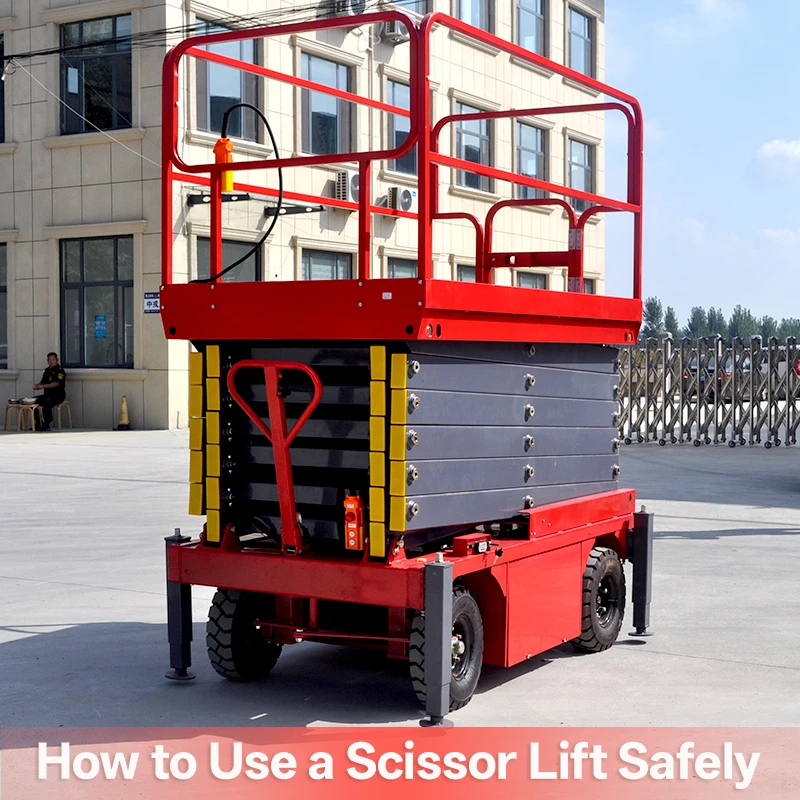
Scissor lifts have become essential equipment across construction, warehousing, and industrial settings due to their ability to safely elevate personnel and materials to heights. However, improper use can result in serious accidents, property damage, or even fatalities. Ensuring safety while operating scissor lifts requires understanding the equipment, adhering to safety protocols, and regularly assessing risk factors.
In this article, we provide a detailed guide on scissor lift safety, backed by industry research data, practical steps, and safety tips, helping businesses optimize operations and reduce risks.
Understanding Scissor Lifts
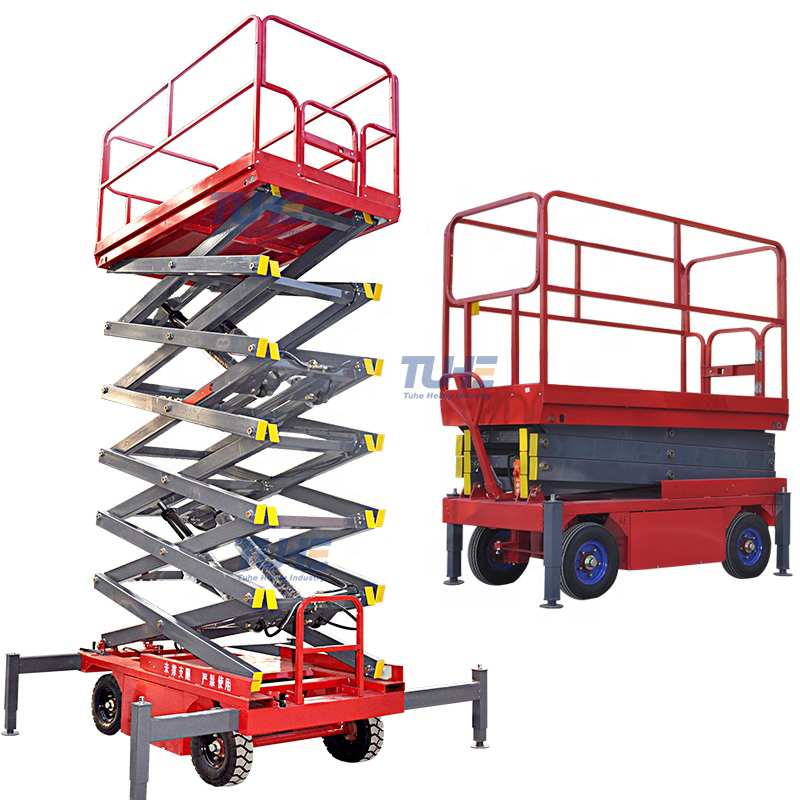
A scissor lift is a type of aerial work platform (AWP) that moves vertically via linked, folding supports resembling a scissor mechanism. They are widely used for indoor and outdoor tasks such as electrical work, painting, maintenance, and inventory management.
Read this article to learn about the uses of scissor lift platforms: What Is a Scissor Lift Used For?
Types of Scissor Lifts
Electric Scissor Lifts: Ideal for indoor use with smooth surfaces.
Hydraulic/Diesel Scissor Lifts: Suitable for outdoor rough terrain.
Mini or Compact Scissor Lifts: Designed for narrow spaces and light-duty tasks.
Key Features
Maximum Working Height: Varies by model, typically 6–18 meters.
Load Capacity: Can range from 200 kg to over 1,000 kg.
Mobility: Some models offer self-propulsion for easier positioning.
Scissor Lift Safety: The Importance
According to OSHA (Occupational Safety and Health Administration) data:
| Statistic | Value |
|---|---|
| Scissor lift-related fatalities (2015–2020) | 65% due to tip-overs |
| Injuries from falls | 23% of reported lift accidents |
| Equipment malfunctions contributing to accidents | 12% |
Key takeaway: Most accidents are preventable through proper training, adherence to safety protocols, and regular equipment inspection.
Pre-Operation Safety Checklist
Before using a scissor lift, operators should conduct a pre-operation inspection, ensuring the lift is safe to use. Key steps include:
Inspect the Lift Structure
Check hydraulic lines for leaks
Examine welds and joints for cracks
Verify Safety Devices
Ensure guardrails are intact
Check emergency stop buttons
Assess Surroundings
Look for overhead obstacles
Identify uneven ground, debris, or slopes
Check Load Capacity
Confirm combined weight of personnel, tools, and materials does not exceed the rated load
Sample Pre-Operation Checklist Table:
| Inspection Item | Status (OK/Not OK) | Notes |
|---|---|---|
| Guardrails | OK | No defects |
| Hydraulic Lines | OK | No leaks detected |
| Emergency Stop | OK | Functional |
| Platform Load | OK | 350 kg, within limit |
| Surface Stability | OK | Concrete, level surface |
Operational Safety Guidelines
Safe operation of scissor lifts involves both mechanical awareness and behavioral safety.
1. Proper Positioning
Always operate on firm, level surfaces.
Avoid slopes exceeding manufacturer recommendations (usually <5°).
Maintain at least 1 meter distance from power lines.
2. Safe Load Management
Never exceed the maximum platform capacity.
Evenly distribute weight across the platform.
Secure tools and equipment to prevent falls.
3. Movement and Navigation
Move the lift only when fully lowered unless designed for elevated travel.
Avoid sudden jerks or turns while elevated.
Use spotters in high-traffic areas.
4. Fall Protection
Guardrails are mandatory; personal fall arrest systems are recommended for lifts above 6 meters.
Avoid leaning over the guardrails or climbing them.
Training and Certification
Operator training significantly reduces accidents. A study by the National Safety Council (NSC) shows:
| Training Level | Accident Reduction |
|---|---|
| No formal training | 100% baseline risk |
| Basic training | 35% reduction |
| Comprehensive certification | 70% reduction |
Training should cover:
Equipment operation
Hazard recognition
Emergency procedures
Maintenance basics
Understanding the working principle of scissor lift platforms: How does a scissor lift work
Common Hazards and How to Avoid Them
1. Tip-Overs
Cause: Uneven ground, excessive load, or sudden movement.
Prevention: Level the lift, adhere to load limits, and avoid side winds >28 km/h.
2. Electrical Hazards
Cause: Contact with overhead power lines.
Prevention: Maintain minimum 10 ft distance from live wires, use insulated tools.
3. Mechanical Failures
Cause: Worn-out parts, hydraulic leaks, or poor maintenance.
Prevention: Regular inspections and scheduled maintenance.
Accident Cause Breakdown Table (Source: OSHA 2022)
| Cause | Percentage of Accidents |
|---|---|
| Tip-over | 65% |
| Falls | 23% |
| Electrical contact | 8% |
| Mechanical failure | 4% |
Maintenance Best Practices
Routine maintenance ensures longevity and safety. Recommendations include:
Daily checks: Controls, tires, guardrails, hydraulic fluid.
Monthly inspection: Battery, wiring, lubrication points, and structural integrity.
Annual certification: Full safety audit by a certified technician.
Maintenance Schedule Table
| Maintenance Frequency | Task |
|---|---|
| Daily | Visual inspection, test controls, check platform load |
| Weekly | Lubrication, tire pressure, battery check |
| Monthly | Inspect hydraulics, welds, bolts |
| Annually | Professional safety audit |
Using Technology for Safer Operations
Modern scissor lifts come with smart safety features:
Tilt sensors and alarms
Emergency lowering systems
Load sensors to prevent overloading
Remote monitoring for fleet safety management
These technologies have contributed to a 25% reduction in workplace accidents among industrial lift users over the past five years.
Industry Research and Statistics
According to a 2023 study by the International Powered Access Federation (IPAF):
90% of scissor lift operators reported better safety outcomes after training and adherence to inspection protocols.
Portable electric lifts showed a 30% lower incident rate than diesel outdoor lifts due to smoother surfaces and lower tipping risk.
Companies with digital maintenance logs had a 40% decrease in mechanical failures.
Comparative Safety Table
| Lift Type | Incident Rate | Common Issues |
|---|---|---|
| Electric Indoor | 1.2 per 1,000 hrs | Operator error, minor tip-overs |
| Diesel Outdoor | 3.5 per 1,000 hrs | Tip-over, rough terrain accidents |
| Compact Mini Lift | 0.8 per 1,000 hrs | Limited reach, low stability if overloaded |
Choosing a Reliable Lift Manufacturer
Selecting a dependable lift supplier ensures safety, efficiency, and long-term cost savings. Tuhe Lift, established in 2012 in Jiyang, China’s “Hometown of Lifting Platforms,” is a leading manufacturer known for:
High-quality scissor lifts with CE and SGS certification
Six major product series, including scissor, mast, and articulated boom lifts
Overseas market presence in the USA, Germany, Australia, and Algeria
Custom solutions and OEM services
Service commitments: 1-day design solution, 24/7 online support, 7-day delivery, 1-year warranty
Tuhe Lift ensures:
Maximum operational safety
Efficient and reliable machines
Cost-effective, durable equipment
By partnering with Tuhe Lift, companies can implement world-class safety standards while boosting productivity.
View Tuhe's scissor lift products:
4~14m Electric Scissor Lift in Mexico
Hydraulic mobile scissor lift table with CE
Conclusion
Operating a scissor lift safely requires a combination of proper training, pre-operation inspections, hazard awareness, and routine maintenance. Data consistently shows that accidents are preventable when protocols are followed, and modern safety technologies are implemented.
For businesses seeking high-quality, reliable, and safe scissor lifts, Tuhe Lift offers industry-leading solutions tailored to diverse operational needs. With decades of experience, certified products, and comprehensive customer support, Tuhe Lift is the trusted partner for achieving both productivity and safety excellence. Contact Tuhe to get a quote.
222.webp)
660.webp)
503.webp)
695.webp)