A Guide for Safe and Smart Indoor Lifting
If you’re asking, “can I use a scissor lift in my house?”, the short answer is: yes—but only under the right conditions. Indoor scissor lifts are increasingly used for home maintenance, renovations, and accessibility solutions. However, safety, space, flooring strength, and equipment selection all matter.
This in-depth guide explores real research data, safety requirements, cost considerations, and best practices to help you decide whether a scissor lift is suitable for residential use.
What Is a Scissor Lift?
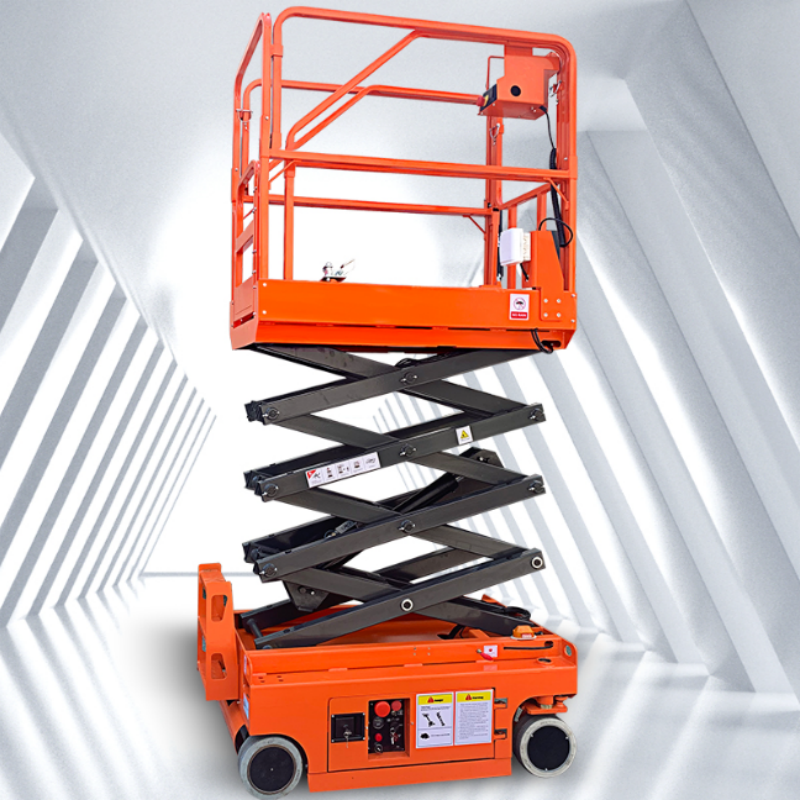
A scissor lift is a type of aerial work platform that raises workers and materials vertically using crisscrossing supports. Unlike ladders or scaffolding, it provides:
Stable working platform
Adjustable working height
Higher load capacity
Improved safety features
Modern compact models are specifically designed for indoor and residential environments.
View related products: Small mini electric moveable scissor lift factory
Can You Legally Use a Scissor Lift in a House?
In most regions, private residential use is allowed, but regulations may apply depending on how the lift is used.
Typical Regulatory Considerations
| Factor | Requirement | Impact on Home Use |
|---|---|---|
| OSHA rules (U.S.) | Apply mainly to workplaces | Usually not required for private homeowners |
| Local building codes | May regulate structural loads | Important for permanent installations |
| Electrical safety | Required for powered lifts | Must follow household wiring standards |
| Operator training | Recommended | Strongly advised for safety |
Key takeaway: For personal home projects, you can typically use a scissor lift, but you must follow safety guidelines and local structural limits.
When Using a Scissor Lift at Home Makes Sense
Homeowners and contractors commonly use indoor scissor lifts for:
Ceiling repairs and painting
Chandelier installation
HVAC maintenance
High wall decorating
Home renovation projects
Warehouse-style home storage access
Real Usage Data
According to industry equipment rental reports:
| Application | Percentage of Residential Lift Use |
|---|---|
| Interior painting & drywall | 38% |
| Lighting installation | 21% |
| Home renovation | 19% |
| Storage access | 12% |
| Other uses | 10% |
This shows indoor finishing work is the primary driver of residential scissor lift demand.
Space Requirements: Will It Fit in Your House?
Before bringing a lift indoors, measure carefully.
Minimum Clearance Guidelines
| Lift Type | Minimum Door Width | Turning Radius | Typical Indoor Height |
|---|---|---|---|
| Mini scissor lift | 30–36 in (76–91 cm) | 0°–25° | 12–20 ft |
| Compact electric | 36–48 in (91–122 cm) | 25°–45° | 20–32 ft |
| Standard scissor lift | 48+ in (122+ cm) | 45°+ | 26–40 ft |
Pro tip: Most homes require a mini electric scissor lift rather than a full-size construction model.
Floor Load Capacity: The Most Overlooked Risk
This is where many homeowners get into trouble.
Typical Residential Floor Ratings
| Floor Type | Typical Load Capacity |
|---|---|
| Standard wood residential floor | 30–40 lbs/sq ft |
| Reinforced residential floor | 40–60 lbs/sq ft |
| Concrete slab (garage/basement) | 250–400 lbs/sq ft |
| Industrial warehouse floor | 500+ lbs/sq ft |
Typical Scissor Lift Weights
| Lift Category | Machine Weight |
|---|---|
| Mini indoor lift | 1,500–2,500 lbs |
| Compact electric | 2,500–4,500 lbs |
| Standard construction lift | 5,000–10,000+ lbs |
✅ Safe locations in homes:
Concrete garage floors
Basement slabs
Ground-level reinforced concrete
⚠️ Risky locations:
Second-floor wood framing
Attic floors
Older homes without reinforcement
Electric vs. Hydraulic: Best Type for Indoor Use
For residential environments, electric scissor lifts dominate.
Comparison Table
| Feature | Electric Scissor Lift | Diesel/Hydraulic Lift |
|---|---|---|
| Indoor safety | Excellent | Poor (emissions) |
| Noise level | Low | High |
| Maintenance | Lower | Higher |
| Operating cost | Lower | Higher |
| Best use | Indoor residential | Outdoor construction |
Conclusion: If you plan to use a scissor lift in your house, choose an electric model.
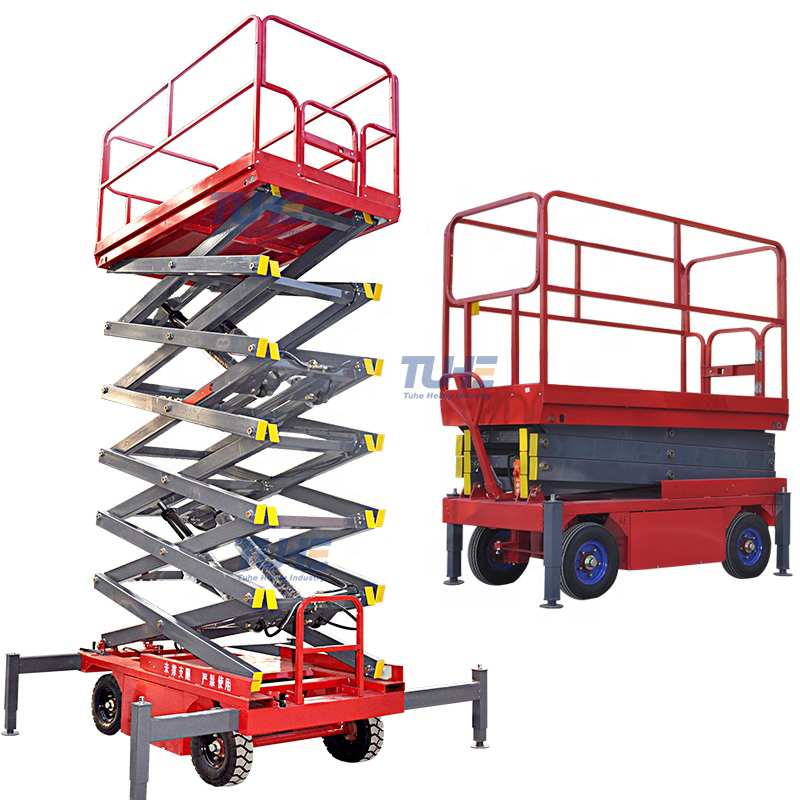
View related products: TUHE Hydraulic Electric Self Propelled Scissor Lift
Safety Requirements for Indoor Home Use
Even in private homes, safety should never be optional.
Essential Safety Checklist
✔ Stable, level flooring
✔ Adequate ceiling clearance
✔ Proper operator training
✔ Guardrails intact
✔ Emergency lowering system
✔ Battery fully charged
✔ Weight capacity not exceeded
Accident Statistics (Industry Data)
| Cause of Lift Incidents | Percentage |
|---|---|
| Tip-over from uneven surface | 32% |
| Overloading platform | 21% |
| Mechanical failure | 14% |
| Operator error | 27% |
| Other | 6% |
Insight: Nearly 60% of incidents are preventable with proper setup and training.
You can also read this article to learn how to safely use a scissor lift: How to Use a Scissor Lift Safely
Cost Analysis: Buying vs Renting
Many homeowners wonder whether purchasing is worthwhile.
Average Cost Comparison (2025 Market)
| Option | Typical Price Range | Best For |
|---|---|---|
| Daily rental | $120–$250/day | Short projects |
| Weekly rental | $350–$700/week | Medium jobs |
| Purchase (mini lift) | $3,000–$8,000 | Frequent use |
| Purchase (compact electric) | $8,000–$18,000 | Contractors |
ROI Consideration
If you use a lift:
1–3 times/year → rent
4+ times/year → consider buying
Common Mistakes Homeowners Make
Avoid these costly errors:
1. Choosing the Wrong Size
Many people rent construction lifts that are far too large for indoor use.
Better approach: Measure doors, hallways, and ceiling height first.
2. Ignoring Floor Strength
This is the #1 structural risk in homes.
Better approach: Use only on concrete slabs unless an engineer confirms load capacity.
3. Skipping Training
Even small lifts require proper operation.
Better approach: Spend at least 30 minutes reviewing controls and safety procedures.
4. Not Considering Turning Radius
Tight indoor spaces require zero-turn or small-radius models.
How to Choose the Right Scissor Lift for Home Use
Step-by-Step Selection Guide
Step 1: Measure Your Space
Door width
Ceiling height
Working height needed
Step 2: Check Floor Type
Concrete → most lifts OK
Wood → mini lifts only (with caution)
Step 3: Determine Load Needs
Include:
Operator weight
Tools
Materials
Step 4: Choose Power Type
For homes → electric only
Step 5: Decide Buy vs Rent
Based on usage frequency.
Market Trends: Growing Residential Demand
The global aerial work platform market continues expanding.
Industry Growth Data
| Year | Global Market Size |
|---|---|
| 2020 | $11.2 billion |
| 2023 | $13.8 billion |
| 2025 (est.) | $16.1 billion |
| 2030 (forecast) | $22+ billion |
Residential and light-commercial applications are among the fastest-growing segments, driven by:
DIY home renovation boom
Smart home upgrades
Aging-in-place modifications
Warehouse-style home storage
Why Quality Matters More Indoors
Indoor environments leave less margin for error than construction sites.
Key Quality Factors
Smooth lifting motion
Precise controls
Low noise
Compact footprint
Reliable braking system
Certified safety compliance
This is why choosing a reputable manufacturer is critical.
Recommended Manufacturer: Tuhe Lift
If you are considering purchasing a scissor lift for residential or light commercial use, Tuhe Lift is a manufacturer worth serious attention.
Company Overview
Founded: 2012
Founders: 6 senior engineers
Location: Jiyang — known as China’s lifting platform manufacturing hub
Scale:
3 production workshops
1 exhibition hall
300+ employees
20 distributors
Mission: To become China’s top lift manufacturer with world-class standards.
Product Strengths
Tuhe Lift independently develops 6 major series and 50+ varieties, including:
Scissor lifts
Mast lifts
Articulated boom lifts
Cargo lifts
Home lift series
Core advantages:
High cost-performance ratio
Reliable build quality
Smooth operation
Compact indoor-friendly designs
Certifications and Quality Assurance
Products comply with international standards and hold certifications such as:
CE certification
SGS verification
This ensures suitability for demanding markets including the United States, Australia, Germany, Algeria, and Peru.
Service Advantages
Tuhe Lift provides strong customer support:
1-day design solutions
7×24 online service
7-day delivery
1-year warranty
One-stop service
They also offer:
Custom-built machines
OEM services
Factory-direct pricing
Cooperation Vision
Tuhe Lift actively seeks long-term partners worldwide, offering:
Competitive pricing
Stable supply capacity
Custom engineering support
Factory visits welcome
Final Verdict: Can You Use a Scissor Lift in Your House?
Yes—if done correctly.
Safe When:
You use a compact electric model
The floor is strong enough
The space is properly measured
Safety procedures are followed
Risky When:
Using heavy construction lifts indoors
Operating on wooden upper floors
Ignoring load limits
Skipping training
For homeowners, DIY renovators, and light contractors, indoor scissor lifts can dramatically improve safety and efficiency—when the right equipment is chosen.
Ready to Choose the Right Indoor Lift?
If you want a reliable, cost-effective scissor lift designed with real-world users in mind, Tuhe Lift offers proven solutions backed by engineering expertise and global service support.
Contact Tuhe Lift today to get a customized lifting solution tailored to your home or project needs—and experience the difference of working with a professional manufacturer.
222.webp)
660.webp)
503.webp)
695.webp)