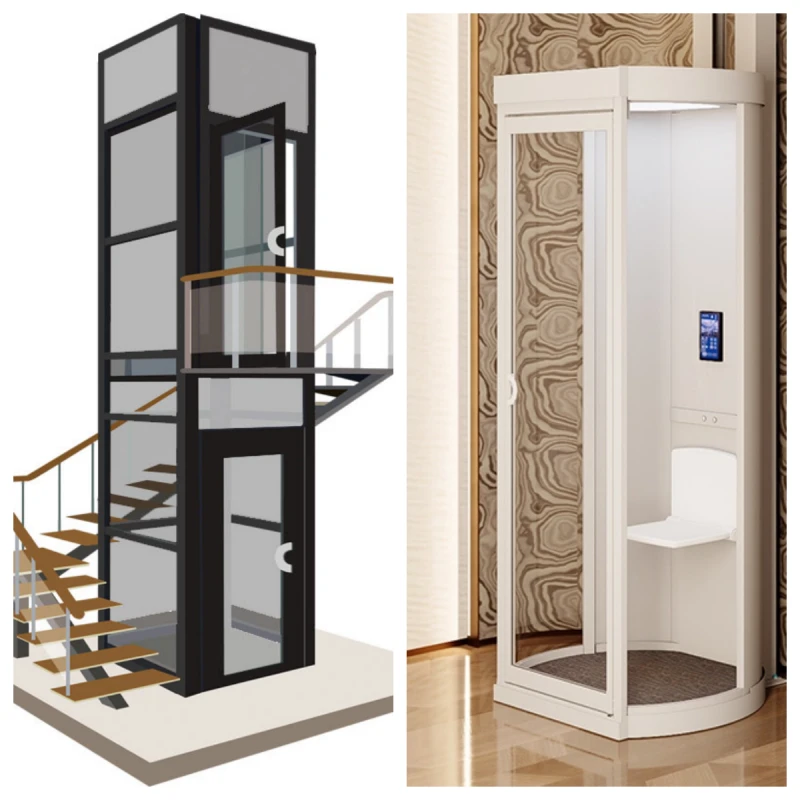
In the evolving landscape of residential architecture and home accessibility, a quiet revolution is taking place. It’s not about grand, sweeping changes to skyscrapers, but rather a subtle yet profound innovation for the single-family home: the shaftless elevator. For decades, the dream of a home elevator was often just that—a dream—shelved due to the immense cost, complex construction, and significant spatial demands of a traditional elevator system. The requirement for a dedicated, load-bearing hoistway (or shaft) running from the basement to the attic was a formidable barrier. However, the advent of the shaftless elevator has dramatically lowered this barrier, transforming a luxury into a practical and increasingly attainable solution for millions of homeowners. But what exactly is a shaftless elevator, and how does it manage to defy the long-standing conventions of vertical transportation?
Defining the Modern Home Accessibility Solution
At its core, a shaftless elevator is a compact, self-contained residential lift designed to be installed in a home with minimal structural modification. Unlike its traditional counterpart, which relies on a fully enclosed, multi-story shaft for support and guidance, a shaftless elevator operates within a much smaller, open-backed structure. This fundamental difference is the key to its appeal.
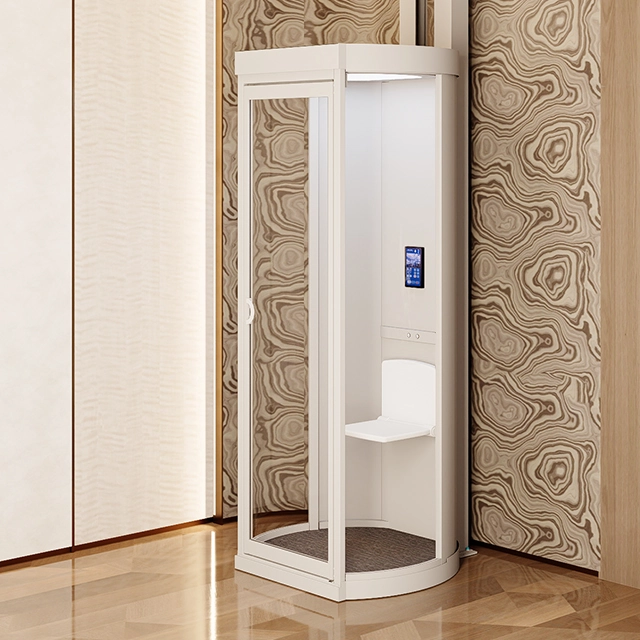
Imagine a sleek, glass-walled cabin that travels between two or three floors. Behind this cabin, instead of a solid wall, you’ll typically find a slim, technical column. This column houses the elevator’s drive system, safety mechanisms, and electrical components. Because it doesn't require a full enclosure, the installation process is vastly simplified. In many cases, a shaftless elevator can be installed directly against an existing wall in a stairwell, a corner of a room, or even through a cut-out in the floor, all without the need for major masonry work, reinforced concrete, or a complete redesign of the home’s structural skeleton. This makes it an ideal solution for both new construction, where it can be seamlessly integrated into the plans, and, more importantly, for retrofitting into existing homes where space is at a premium and construction disruption must be minimized.
The primary purpose of these systems is to enhance accessibility and future-proof a home. They are not high-speed passenger elevators meant for commercial buildings; they are personal mobility devices designed for slow, safe, and comfortable travel for one or two individuals, often with a mobility aid like a walker or a small wheelchair. Their rise in popularity is closely tied to broader societal trends, including an aging population seeking to "age in place" and a growing awareness of the importance of universal design in creating homes that are functional for people of all abilities.
The Mechanics of Motion: How Does It Work Without a Shaft?
The magic of the shaftless elevator lies in its innovative engineering, which replaces the bulky, rope-and-pulley systems of the past with more compact and efficient technologies. While specific implementations vary by manufacturer, the two most common drive systems are the screw-nut drive and the hydraulic drive.
The Screw-Nut Drive System is the most prevalent in modern shaftless designs. In this system, a large, vertical, threaded steel rod (the screw) runs the height of the elevator's travel path inside the technical column. Attached to the back of the elevator car is a drive nut that meshes with this screw. An electric motor, also housed in the column, turns the screw. As the screw rotates, the drive nut—and therefore the entire car—is either raised or lowered along the thread, much like a nut moving up and down a bolt. This system is self-supporting and requires no counterweights or machine room, contributing significantly to its compact footprint. Its operation is smooth, quiet, and inherently stable, as the car is always physically connected to the drive mechanism.
The Hydraulic Drive System, while less common in the newest micro-elevator models, is another option. This system uses an electric pump to push hydraulic fluid into a cylinder, which in turn raises a piston connected to the elevator car. To descend, a valve opens, allowing the fluid to return to a reservoir, and the weight of the car gently lowers it. A compact hydraulic power unit is installed at the base of the elevator. While powerful and capable of handling heavier loads, this system can be slightly noisier than the screw-nut drive and requires a small pit for the cylinder, though still far less invasive than a traditional elevator installation.
Both systems are governed by a sophisticated electronic control unit that manages speed, position, and door operation. Safety is paramount, and these elevators are equipped with multiple redundant systems, including emergency brakes that engage if the car moves too quickly, automatic battery backups for power outages, and sensors to prevent the doors from closing on an obstruction.
What are the key features of shaftless elevators?
Based on industry information and leading manufacturers like Stiltz, Aritco, and Cibes, the key features of shaftless elevators are as follows:
No Full Enclosed Hoistway Required: This is the defining feature. Instead of a traditional, load-bearing shaft built into the home's structure, shaftless elevators use a compact, self-supporting technical column (often at the rear) that houses the drive system and safety components. This allows for installation against an existing wall or in a stairwell with minimal construction.
Compact Footprint: Designed for space efficiency, these elevators typically require a footprint of only about 3' x 4' (0.9m x 1.2m), making them ideal for retrofitting into existing homes where space is limited.
Simple and Fast Installation: Because they don't require major structural work like pouring concrete for a shaft, installation is significantly less disruptive. Most installations can be completed in just a few days, minimizing mess and inconvenience for the homeowner.
Cost-Effectiveness: The simplified design and installation process translate to a much lower overall cost compared to traditional residential elevators, often ranging from $30,000 to $60,000 USD, making home accessibility more affordable.
Modern Drive Systems: They primarily use efficient and quiet drive technologies:
Screw-and-Nut Drive: A motor turns a vertical threaded rod, and a nut attached to the car moves up and down the thread. This system is self-contained and very stable.
Hydraulic Drive: An electric pump pushes fluid into a cylinder to raise the car. It’s powerful but may require a small pit.
Designed for Accessibility: These elevators are purpose-built for personal mobility, typically serving 1-2 passengers with a capacity of 500-750 lbs (227-340 kg). They are perfect for individuals using walkers or small wheelchairs who wish to "age in place."
Limited Travel: They are generally designed for 2-3 stops, which is sufficient for most single-family homes but not for larger, multi-story residences.
Integrated Safety Features: Despite their simplicity, they comply with strict safety codes (like ASME A17.1 Part V in the US or EN 81-41 in Europe) and include features such as automatic interlocked doors, emergency brakes, battery backup for power outages, and communication systems.
View related products:
3 floors small residential shaftless home elevator
3-12m lifting height low cost hydraulic shaftless house elevator
A Comparative Analysis: Shaftless vs. Traditional Elevators
To truly appreciate the value proposition of a shaftless elevator, it is essential to compare it directly with a traditional residential elevator across several critical dimensions. The following table summarizes the key differences:
| Feature | Shaftless Elevator | Traditional Residential Elevator |
|---|---|---|
| Installation Space Required | Minimal. Typically 3'x4' (0.9m x 1.2m) footprint. No full shaft needed. | Extensive. Requires a fully enclosed, load-bearing hoistway (shaft) of at least 5'x5' (1.5m x 1.5m), plus a machine room or overhead space. |
| Installation Time & Disruption | Low impact. Installation can often be completed in 2-5 days with minimal mess. Ideal for retrofits. | High impact. Requires weeks or months of construction, involving framing, drywall, electrical, and potentially structural work. Highly disruptive. |
| Cost | Significantly lower. Typically ranges from $30,000 to $60,000 USD. | Much higher. Costs often start at $80,000-$100,000+ USD and can easily exceed $150,000 with custom finishes and complex installations. |
| Travel Capacity | Designed for 1-2 passengers. Typical capacity: 500-750 lbs (227-340 kg). | Higher capacity. Can be designed for 2-4+ passengers. Typical capacity: 750-1,500+ lbs (340-680+ kg). |
| Number of Stops | Usually limited to 2-3 floors due to design and space constraints. | Can serve any number of floors in a home, from a simple two-stop to a five-story mansion. |
| Customization & Design | Good range of standard finishes (glass, wood, metal panels). Some customization available, but options are more limited than traditional. | Highly customizable. Can be finished to match any interior design, with bespoke materials, lighting, and fixtures. |
| Speed | Slower. Typical speed is around 20-30 feet per minute (fpm). | Faster. Typical speeds range from 30-50 fpm, providing a quicker journey. |
| Primary Use Case | Accessibility, aging in place, convenience in smaller homes. | Luxury, high-capacity transport, serving larger multi-story homes. |
This comparison reveals that the shaftless elevator is not a direct replacement for a traditional elevator in every scenario. Instead, it occupies a distinct niche, offering a pragmatic and affordable middle ground between a conventional staircase and a full-scale residential elevator.
Challenges of Retrofitting Shaftless Elevators into Existing Homes
1. Structural Load-Bearing Capacity
Challenge: Although shaftless elevators are relatively lightweight, they still need to be securely anchored to floor slabs and walls. Older homes may have structural elements that cannot safely support the additional static and dynamic loads.
Solution: A professional structural engineer should conduct an on-site assessment. If necessary, reinforcement of the floor slab or wall at the installation location will be required—adding extra cost and time to the project.
2. Spatial Constraints
Challenge: Despite their compact footprint, shaftless elevators can still be difficult to fit in tightly designed homes, narrow stairwells, or where load-bearing walls are poorly positioned—making it hard to find a suitable spot that accommodates both the unit and door clearance.
Solution: Precise measurements and 3D planning are essential. In some cases, minor modifications—such as removing part of a staircase step or adjusting a wall—may be needed, which adds to the overall construction effort.
3. Electrical Requirements
Challenge: Elevators require a dedicated, stable power supply. Many older homes have outdated electrical panels or insufficient capacity to support elevator operation.
Solution: Typically, the main electrical panel must be upgraded, and a new, code-compliant dedicated circuit must be run from the meter to the elevator location. This often involves coordination with property management or the local utility company.
4. Headroom and Pit Requirements
Challenge:
Headroom: At the top landing, sufficient overhead clearance (typically 2,000–2,300 mm) is needed above the car to house the drive mechanism and safety space. Homes with sloped ceilings or attic conversions may not meet this requirement.
Pit: While many shaftless elevators require only a shallow pit—or even zero pit—some models still need a level, unobstructed floor area. Older homes may have uneven floors or buried utilities that complicate installation.
Solution: Opt for “zero-pit” or “shallow-pit” models. For insufficient headroom, consider customized engineering solutions or alternative lift types.
5. Building Codes and Permitting
Challenge: Installing a permanent home modification like an elevator may trigger local building regulations. Permitting requirements vary significantly by region—some jurisdictions require formal building permits, stamped drawings, and final inspections.
Solution: Always consult local building authorities before starting the project, or work with an experienced installer who can manage the permitting and compliance process to avoid legal or safety issues.
6. Disruption to Existing Finishes
Challenge: Even though installation is less invasive than traditional elevators, some damage to walls, flooring, or trim is inevitable (e.g., drilling, cutting openings).
Solution: Hire a professional installation team that uses protective measures during construction and provides basic cosmetic repairs afterward. However, high-quality restoration of premium finishes (e.g., hardwood floors, custom tiles) may require hiring a separate contractor.
By proactively understanding and planning for these potential challenges, homeowners can ensure a smoother retrofit experience. As a manufacturer, Tuhe Lift offers professional on-site surveys and tailored design solutions during the pre-sales phase to help clients mitigate most of these risks.
Market Landscape and Key Players
The market for shaftless and compact home elevators has experienced robust growth over the past decade, driven by demographic shifts and technological advancements. According to industry research, the global home elevator market, of which shaftless models are a rapidly expanding segment, is projected to grow at a compound annual growth rate (CAGR) of over 7% through 2030. This growth is particularly strong in North America and Europe, where aging populations and a strong preference for independent living are key market drivers.
Several manufacturers have become leaders in this specialized field, each offering their own take on the shaftless concept:
Stiltz (UK): A pioneer in the dual-rail, self-supporting home elevator, Stiltz elevators are known for their unique design that requires no load-bearing walls. Their systems are popular for their ease of installation in existing homes.
PVE (Pneumatic Vacuum Elevator) (USA/Global): PVE offers a distinct type of "shaftless" elevator that uses air pressure differentials to move the car within a clear, cylindrical tube. This creates a unique, panoramic riding experience and is truly self-supporting, requiring only a small footprint on each floor.
Aritco (Sweden): A major European player, Aritco’s HomeLift series features a compact, gear-driven system with a sleek, modern design. They emphasize smart home integration and a wide range of aesthetic options.
Cibes (Sweden): Another leading European brand, Cibes Elevator Group specializes in platform lifts and compact cabin elevators that fit the shaftless category. Their products are known for their robustness and compliance with stringent European safety standards.
These companies, among others, are continuously innovating, focusing on improving energy efficiency, reducing noise, enhancing safety features, and offering more attractive interior design choices to appeal to a broader consumer base.
Navigating the Regulatory and Safety Framework
While shaftless elevators are simpler to install, they are by no means unregulated. They are classified as machinery and must comply with a strict set of national and local safety codes. In the United States, the primary governing standard is the ASME A17.1/CSA B44 Safety Code for Elevators and Escalators. However, recognizing the unique nature of these small, private residence elevators, the code includes a specific section (Part V, Section 5.1) for "Private Residence Elevators," which provides tailored requirements that are less stringent than those for public-use elevators but still ensure a high level of safety.
Key safety features mandated by these codes include:
Automatic Doors: Doors must be interlocked so the elevator cannot move unless the doors are fully closed and locked.
Emergency Systems: A phone or communication system to call for help, an emergency light, and a manual lowering system (often battery-powered) in case of a power failure.
Over-Speed Governor: A mechanical device that will automatically apply the brakes if the car begins to fall or move too quickly.
Final Limit Switches: These switches stop the elevator before it can reach the top or bottom of its travel path, preventing a collision.
It is crucial for any homeowner considering a shaftless elevator to work with a reputable dealer who is fully versed in the local building codes and permitting processes. A professional installation that adheres to all safety regulations is non-negotiable.
Weighing the Advantages and Limitations
Like any technology, the shaftless elevator comes with a clear set of advantages and limitations that potential buyers must carefully consider.
Advantages:
Accessibility: The most significant benefit is providing a safe and easy way for individuals with mobility challenges to access all levels of their home, promoting independence and dignity.
Space Efficiency: Its small footprint makes it feasible for homes where a traditional elevator was never an option.
Cost-Effectiveness: The lower purchase and installation price opens the door to vertical accessibility for a much wider audience.
Ease of Installation: The quick, clean installation process minimizes disruption to daily life, a major factor for families and older adults.
Home Value: Adding an elevator can be a valuable selling point, appealing to a growing market of buyers looking for accessible or future-proofed homes.
Limitations:
Limited Capacity: It is not suitable for transporting heavy items, large groups of people, or full-sized wheelchairs in many models.
Floor Limitation: Most models are restricted to two or three stops, which may not be sufficient for very tall homes.
Speed: The slower travel speed is a trade-off for its compact and safe design.
Aesthetic Integration: While modern designs are sleek, the technical column at the back of the car is always visible, which may not suit every interior design scheme as seamlessly as a fully enclosed, custom-finished traditional elevator.
Maintenance and Service Details for Shaftless Elevators
Shaftless elevators—particularly the widely used screw-driven type—are generally easier to maintain than traditional traction elevators due to their simpler mechanical design. Below are the core maintenance and servicing details, based on industry standards and practices from leading brands such as Aritco and Cibes.
1. Daily/Weekly User Checks (Performed by Homeowners)
These simple tasks help identify potential issues early:
Cleaning: Wipe down the interior cabin, door panels, and control panel regularly with a dry or slightly damp cloth. Avoid abrasive or corrosive cleaning agents.
Unusual Noises or Vibrations: Pay attention to any abnormal sounds, shaking, or unusual odors during operation.
Function Tests: Periodically test the emergency call button, cabin lighting, and ventilation fan to ensure they are working properly.
2. Professional Preventive Maintenance (Performed by Authorized Technicians)
This is essential for ensuring long-term safety and reliability. Maintenance is typically scheduled every 6 or 12 months, depending on usage frequency and manufacturer recommendations.
Semi-Annual Service (Every 6 Months)
Screw Lubrication: The most critical task. Technicians inspect and apply high-performance grease to the drive screw to minimize wear, ensure smooth operation, and extend service life.
Safety System Testing:
Test door locks and light curtains (anti-pinch sensors) at all landings.
Verify sensitivity of the overload protection system.
Test the emergency stop button.
Check emergency lighting and automatic leveling during power failure (if equipped).
Electrical Inspection: Inspect terminal connections in the control cabinet for looseness, remove dust, and confirm proper circuit board operation.
Mechanical Tightening: Inspect and tighten all bolts and fasteners on the cabin, guide rails, and drive unit.
Annual Service (Every 12 Months)
In addition to the semi-annual checks, the following in-depth inspections are performed:
Full Safety Circuit Diagnostics: Thoroughly test the entire safety control system to ensure correct logic and function of all safety switches (e.g., limit switches, inspection switches).
Drive System Inspection: Examine the motor, gearbox (if applicable), and screw mechanism for signs of wear or damage.
Battery Check: For models with backup batteries (used for emergency lighting or auto-leveling), test battery voltage and condition; replace if necessary.
Performance Evaluation: Record and analyze operational parameters such as travel speed and leveling accuracy to ensure compliance with factory specifications.
3. Repairs
Thanks to their simplified and modular design, shaftless elevators have fewer failure points. Common repairs typically involve:
Electronic Component Replacement: e.g., control panels, floor indicators, or sensors.
Door System Adjustments or Replacements: e.g., door belts, locks, or light curtains.
Lubrication Issues: Noise or rough operation caused by insufficient lubrication.
Power Supply Problems: Faults in the dedicated electrical line or circuit breaker.
Most components can be quickly replaced, resulting in minimal downtime.
4. Summary of Maintenance Advantages
Low Cost: Fewer service items and lower labor and parts expenses compared to traditional elevators.
High Convenience: Routine maintenance usually takes only 1–2 hours, causing minimal disruption to daily life.
Strong Preventive Capability: Regular professional servicing can prevent over 90% of potential failures, enabling reliable operation for 10 years or more.
As a manufacturer, Tuhe Lift offers customized maintenance plans and rapid-response repair services to ensure your home elevator always operates at peak performance.
Key Differences in Maintenance Between Shaftless and Traditional Holed Elevators
Shaftless elevators—typically screw-driven or hydraulic platform home lifts—differ significantly from traditional holed elevators (mostly traction-type, with either a separate machine room or machine-room-less but enclosed hoistway) in maintenance requirements. These differences stem primarily from variations in structural design, drive mechanism, installation environment, and component complexity.
Below are the core distinctions in their maintenance practices:
1. Maintenance Frequency and Intervals
Shaftless Elevators:
Typically require professional servicing every 6 to 12 months. Due to their simple structure, low speed, light load capacity, and infrequent residential use, maintenance demands are minimal.Traditional Holed Elevators (especially public/commercial traction elevators):
According to China’s Elevator Maintenance Rules (TSG T5002), they must undergo maintenance at least once every 15 days (biweekly, quarterly, semi-annual, and annual checks). High usage frequency and system complexity necessitate frequent inspections.
Key Difference: Shaftless home elevators require far less frequent maintenance than commercial or residential building traction elevators.
2. Complexity of Maintenance Tasks
| Item | Shaftless Elevator (Screw-Driven) | Traditional Holed Elevator (Traction-Type) |
|---|---|---|
| Drive System | Screw lubrication and motor inspection (externally accessible, easy to service) | Traction machine, gearbox, wire rope tension, counterweight, governor, safety gears (requires specialized tools and hoistway access) |
| Hoistway Environment | No enclosed hoistway—no need for hoistway cleaning or waterproofing checks | Requires regular dust removal, guide rail lubrication, pit water inspection, lighting, and ladder safety checks |
| Electrical System | Highly integrated control cabinet with minimal wiring—simple inspection | Multi-floor call systems, complex logic circuits, and traveling cables (prone to aging and breakage) |
| Safety Devices | Light curtain, door locks, overload protection, emergency stop (fewer components) | Complex safety circuitry including governor–safety gear linkage, buffers, and multi-point door interlocks |
Key Difference: Shaftless elevators have fewer maintenance items and lower technical barriers; traditional elevators involve numerous mechanical linkages and safety interlocks requiring certified professionals.
3. Accessibility and Working Space for Repairs
Shaftless Elevators:
The drive and control systems are usually mounted on the top or side of the cabin. Most maintenance can be performed without entering a confined hoistway, enhancing safety and efficiency.Traditional Holed Elevators:
Technicians must work inside a dark, enclosed, vertical hoistway, often on the car top or in the pit—posing risks such as falls or entrapment. Strict safety protocols are mandatory.
Key Difference: The “open” design of shaftless elevators greatly improves maintenance accessibility and safety.
4. Lubrication and Wear Management
Shaftless Elevators:
Primary lubrication points are the drive screw and guide rails. High-temperature specialty grease is applied every 6 months.Traditional Holed Elevators:
Require lubrication of guide rails, traction sheave bearings, idler pulleys, safety gear linkages, door operators, and periodic cleaning/oiling of steel ropes to prevent rust.
Key Difference: Shaftless elevators have far fewer lubrication points, making upkeep simpler.
5. Fault Diagnosis and Repair
Shaftless Elevators:
Modular design means most failures involve electronic components (e.g., sensors, buttons) or insufficient lubrication. Repairs are fast, with minimal downtime.Traditional Holed Elevators:
Failures may include mechanical linkage malfunctions (e.g., unintended safety gear activation), broken wire strands, or control logic errors—requiring complex diagnostics and longer repair times.
6. Environmental Adaptability
Shaftless Elevators (if installed in semi-open areas):
Require attention to dust and moisture protection, especially in humid or dusty regions (e.g., southern China). Increased cleaning frequency is recommended.Traditional Holed Elevators:
The enclosed hoistway provides inherent protection, but still requires proper waterproofing, ventilation, and temperature control—particularly for machine-room-less models where motor cooling depends on hoistway airflow.
Summary: Core Maintenance Advantages Compared
| Maintenance Aspect | Shaftless Elevator | Traditional Holed Elevator |
|---|---|---|
| Cost | Low (labor + parts) | High |
| Frequency | Low (every 6–12 months) | High (every 15 days or more) |
| Technical Skill Required | Moderate to low | High (requires certified personnel) |
| Downtime per Service | Short (1–2 hours) | Long (possibly half a day or more) |
| User Involvement | Owners can perform basic daily checks | Almost entirely dependent on professionals |
Conclusion
For residential applications, shaftless elevators offer clear maintenance advantages: they are more convenient, cost-effective, and time-efficient to maintain. As a manufacturer, Tuhe Lift further enhances user peace of mind through smart remote diagnostics, customized maintenance packages, and responsive support—ensuring truly “hassle-free operation” throughout the elevator’s lifecycle.
How to Prevent Failures in Shaftless Elevators
Shaftless elevators—particularly screw-driven home lifts—are known for their relatively simple structure and low failure rates. However, to ensure long-term, stable, and safe operation, a systematic approach to preventing potential issues is essential. Below are key preventive measures covering user habits, scheduled maintenance, and environmental management.
1. Strict Adherence to Professional Maintenance (The Most Critical Prevention Measure)
Professional servicing prevents over 90% of potential failures.
Every 6 Months: Authorized technicians should perform basic maintenance, focusing on:
Screw Lubrication: Apply high-temperature specialty grease to the drive screw to prevent dry friction, which can cause noise, jerky movement, or thread wear.
Safety Device Testing: Verify the responsiveness of light curtains (anti-pinch sensors), door locks, overload protection, and emergency stop buttons.
Electrical Inspection: Tighten terminal connections and clean dust from the control cabinet to avoid poor contact or short circuits.
Every 12 Months: Conduct in-depth maintenance, including:
Inspection of motor condition
Battery health check (if equipped with backup power)
Calibration of operational parameters (e.g., leveling accuracy, speed)
Recommendation: Sign an annual maintenance contract with the manufacturer (e.g., Tuhe Lift) to ensure timely, standardized service.
2. Daily User Practices & Self-Checks (Early Warning System)
Homeowners can easily perform these tasks to detect issues early:
Keep It Clean: Wipe down the cabin, control panel, and door area regularly with a dry cloth. Never use corrosive cleaners, as they can damage electronic components.
Listen for Unusual Noises: If you hear abnormal grinding, scraping, or feel vibrations during operation, stop using the elevator immediately and contact service—these often signal insufficient lubrication or loose parts.
Monthly Function Test: Check the emergency call system, cabin lighting, and ventilation fan to ensure emergency features work properly.
Follow Proper Usage Guidelines:
Never exceed the rated capacity (typically 250–400 kg for home lifts). Overloading accelerates wear on the screw and motor.
Stand evenly inside the cabin to avoid uneven stress that can cause rail misalignment over time.
Do not force the doors open—always wait for them to fully open before entering or exiting.
3. Ensure Stable Power Supply
Electrical issues are a common cause of malfunctions:
Dedicated Circuit: Use an independent, properly sized power line (typically ≥2.5 mm² copper cable) and avoid sharing with other high-power appliances.
Voltage Stability: In older homes with unstable voltage, install a voltage stabilizer to protect the motor from damage due to under-voltage or over-voltage.
Power Failure Protection: Confirm your elevator includes automatic leveling during power outages and emergency lighting (standard on most reputable brands) to prevent entrapment.
4. Optimize the Installation Environment
Dust & Moisture Protection:
If installed in semi-open areas (e.g., next to stairs), consider adding a simple dust curtain. In humid regions (e.g., southern China), ensure good ventilation to prevent rust on metal parts or moisture damage to circuit boards.Level Ground:
Keep the base area free of water and debris. Even “zero-pit” models require a solid, level floor for safe operation.Avoid Blocking Sensors:
Do not hang items or apply stickers near the light curtain (infrared sensor) at the doorway—obstructions can falsely trigger safety stops.
5. Choose a Reputable Brand & Professional Installation
Prevention Starts at the Source:
Select brands certified to international standards like CE or TÜV (e.g., Aritco, Cibes, Tuhe Lift). Their core components—screw mechanism, motor, and control system—are more reliable and durable.Professional Installation Matters:
Have the unit installed by the manufacturer’s certified team to ensure proper leveling, bolt tightening, and electrical wiring. Up to 70% of early-stage failures stem from improper installation.
6. Leverage Smart Monitoring (Available on Premium Models)
Advanced shaftless elevators may include:
Remote Diagnostics: Real-time monitoring of operating status to provide early warnings (e.g., low lubrication, voltage anomalies).
Usage Data Logging: Helps technicians quickly pinpoint root causes and reduce repair time.
Conclusion: Prevention = Proper Use + Regular Maintenance + Environmental Care
By consistently following these three pillars:
Schedule professional maintenance every 6 months (don’t skip it!),
Stay alert to unusual sounds or smells during daily use,
Ensure a stable and safe power supply,
your shaftless elevator can operate reliably for 10+ years with no major repairs.
As a manufacturer, Tuhe Lift offers full-lifecycle support—from site survey and installation to intelligent maintenance solutions—minimizing your risk and maximizing peace of mind.
The cost of a "frameless" or shaftless home elevator
I. Cost of a Shaftless (Screw-Driven) Home Elevator (2026)
| Floors | Price Range (USD) | Notes |
|---|---|---|
| 2 Floors | $17,600 – $29,300 | Basic domestic models can start as low as $14,700 (¥100,000) |
| 3 Floors | $22,000 – $41,000 | Most common choice for families; best value |
| 4+ Floors | $29,300 – $58,700+ | Each additional floor adds ~$4,400–$8,800 |
Note: Prices above are for mainstream Chinese brands (e.g., Tuhe Lift, Longchuang, Kuen).
Imported brands (e.g., Cibes, Aritco, ThyssenKrupp Home Elevator) cost 30%–100% more, with a typical 3-floor unit priced between $36,700 – $66,000.
II. Cost Breakdown (USD)
Equipment (60–70% of total cost)
Includes screw drive system, cabin (steel/glass), control panel, safety features (light curtain, overload protection, emergency stop).
Custom options (e.g., panoramic glass, wood veneer, smart controls) add $1,500 – $7,300 per feature.
Installation (20–30%)
Floor opening reinforcement
Electrical circuit upgrades (dedicated 2.5mm²+ copper line)
Remote area delivery
Potential extra cost: $1,500 – $7,300
Usually included in the quoted price, but extra fees may apply for:
Civil Works (Often Overlooked!)
A clear installation footprint (~1.2m x 1.0m)
Floor load capacity ≥250 kg/m²
Minor structural modifications if not pre-planned
Estimated cost: $730 – $4,400
Though "shaftless," you still need:
Annual Maintenance
$220 – $515/year
Recommended: 3–5 year service packages for discounts.
III. Key Factors Affecting Price
Brand: Domestic vs. imported (up to 2x difference)
Cabin Finish: Powder-coated steel (basic) vs. tempered glass (panoramic) vs. solid wood (premium)
Door Configuration: Single-side door (cheaper) vs. three-side door (for central staircases)
Smart Features: App control, remote diagnostics, voice assistant (+$730 – $2,900)
Pricing Transparency: Always confirm if the quote is all-inclusive (equipment, shipping, tax, installation).
IV. Cost Comparison: Shaftless vs. Traditional Residential Elevator
| Feature | Shaftless (Screw) Home Elevator | Traditional Traction Elevator |
|---|---|---|
| Typical Use | Private homes, retrofits | New multi-story residential buildings |
| Requires Hoistway? | No | Yes (concrete/steel shaft required) |
| Machine Room? | No | Often yes (or integrated in hoistway top) |
| 3-Floor Total Cost | $22,000 – $41,000 | $66,000 – $132,000+ |
| Installation Time | 3–7 days | 4–12 weeks (including shaft construction) |
| Maintenance Frequency | Every 6–12 months | Every 15 days (per Chinese regulations for public/commercial lifts) |
| Space Required | ~1.2m x 1.0m | ~1.5m x 1.5m + full-height shaft |
| Best For | Existing homes, low usage | New builds, high-frequency use |
Key Insight: A traditional traction elevator in a private residence (if allowed by local codes) typically costs 2–3 times more than a shaftless model, primarily due to civil construction (hoistway, pit, machine room) and complex mechanical systems.
V. Money-Saving Tips
Choose a reputable domestic brand like Tuhe Lift—offers 60% of the price of imports with reliable core components.
Avoid over-customizing—basic finishes are fully functional; upgrade aesthetics later if desired.
Demand an “all-inclusive” quote covering equipment, delivery, tax, and installation to avoid hidden fees.
Use the manufacturer’s free site survey—professional assessment prevents costly structural surprises.
Summary
A standard 3-floor shaftless home elevator in China in 2026 costs $22,000 – $41,000.
Imported or luxury models range from $36,700 – $66,000.
In contrast, a traditional residential traction elevator (including hoistway construction) starts at $66,000 and can exceed $132,000.
As a manufacturer, Tuhe Lift provides end-to-end services—from free site evaluation and transparent pricing to a 10-year warranty on core components—helping homeowners achieve safe, stylish, and low-maintenance vertical mobility at a reasonable cost.
For an accurate quote, please provide: number of floors, available space dimensions, preferred door direction, and interior style preference.
Conclusion: A Transformative Step for Home Accessibility
In conclusion, a shaftless elevator is far more than just a smaller version of a traditional lift. It is a purpose-built, innovative solution that addresses a critical need in modern housing: accessible, multi-level living without the prohibitive costs and complexities of the past. By leveraging compact drive technologies and a self-contained design, it bypasses the need for a massive structural shaft, making vertical mobility a realistic option for countless homeowners.
Its role is not to replace the grand residential elevator in a sprawling estate but to democratize the benefits of vertical transportation for the average family home. For someone recovering from surgery, an aging parent wishing to remain in their beloved home, or a person with a permanent disability, a shaftless elevator can be a life-changing investment in independence, safety, and quality of life. As technology continues to advance and awareness grows, the shaftless elevator is poised to become an increasingly common and welcome feature in the homes of the future, proving that sometimes, the most impactful innovations are the ones that simply make everyday life a little easier for everyone.
Why Choose Tuhe Lift?
As the demand for accessible and convenient home living solutions grows, partnering with a reliable, innovative, and customer-focused manufacturer is paramount. Tuhe Lift stands out as a leader in this dynamic field.
Established in 2012 by six senior engineers in Jiyang—the renowned "Hometown of China's Lifting Platform Manufacturing"—Tuhe Lift has a clear mission: to become China’s top lift manufacturer by adhering to world-class standards. Our operation is substantial, featuring three state-of-the-art production workshops, a dedicated exhibition hall, a team of over 300 skilled employees, and a network of 20 distributors ensuring global reach.
Our strength lies in our comprehensive and independently developed product portfolio. We offer six major series encompassing over 50 varieties, including scissor lifts, mast lifts, articulated boom lifts, cargo lifts, and a specialized home lift series designed with modern accessibility needs in mind. Every product is engineered for a high cost-performance ratio and backed by reliable quality, certified to international standards including CE and SGS.
Tuhe Lift serves a diverse global market, with a strong domestic presence and exports spanning the USA, Australia, Germany, Algeria, Peru, and beyond. We understand that every home and project is unique, which is why we provide customized services to build safe and efficient machines tailored to your specific requirements, along with OEM capabilities.
Our commitment to service excellence is unwavering:
1-Day Design Solution: Get a professional plan quickly.
7×24 Online Service: Support whenever you need it.
7-Day Delivery: Fast turnaround for standard models.
1-Year Warranty: Peace of mind for your investment.
One-Stop Service: We manage the entire process to save you time and hassle.
We are dedicated to building long-term partnerships by offering advantageous products at favorable prices. With our own factories and a welcoming showroom in Jiyang, we invite you to visit us and experience the Tuhe Lift difference firsthand.
222.webp)
660.webp)
503.webp)
695.webp)