Customized cargo lift platform freight lift elevator manufacturer OEM
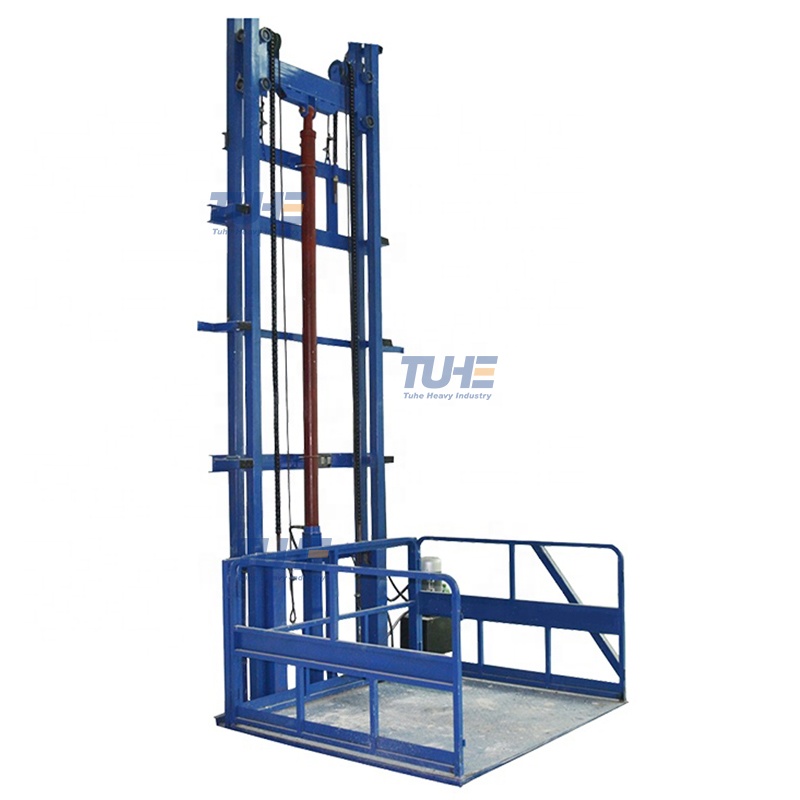
A customized cargo lift platform elevator is a vertical lifting system designed to transport goods, materials, pallets, equipment, and other heavy loads between different floors or working levels. Unlike passenger elevators, cargo lifts focus on load capacity, durability, platform dimensions, operational efficiency, and reliable performance in demanding industrial environments.
For warehouses, factories, logistics centers, workshops, commercial buildings, and multi-level production facilities, a customized cargo lift can be engineered according to the actual application rather than forcing the project to fit a standard elevator specification.
As an experienced cargo lift platform elevator manufacturer and OEM supplier, Tuhe Lift provides customized lifting solutions for different building structures, loading requirements, travel heights, and operating environments. OEM production allows distributors, engineering contractors, equipment integrators, and industrial brands to source cargo lifts with their own specifications and branding.
What Is a Customized Cargo Lift Platform Elevator?
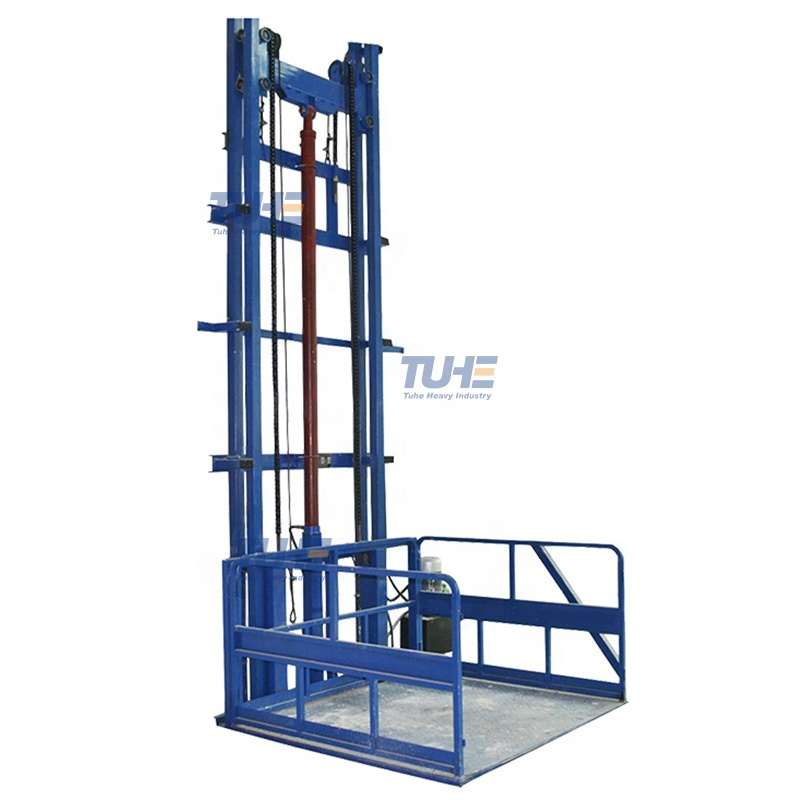
A cargo lift platform elevator is a vertical lifting platform used primarily for transporting goods rather than passengers. Depending on the project, it can use hydraulic, mechanical, or other lifting technologies.
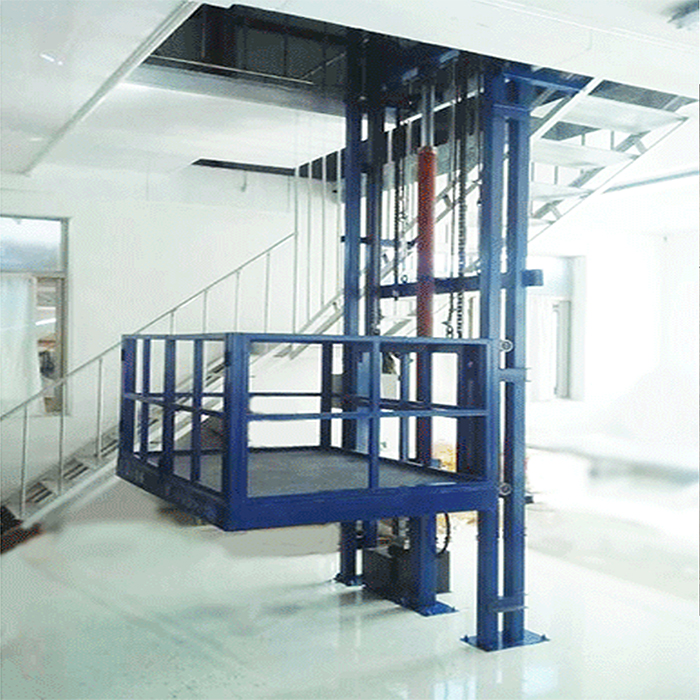
Hydraulic cargo lifts are particularly suitable for applications requiring high load capacity and stable vertical movement. The hydraulic power unit drives the cylinder, which raises or lowers the platform through controlled hydraulic pressure.
Typical applications include:
Moving pallets between warehouse floors
Transporting production materials
Connecting different workshop levels
Moving machinery and industrial equipment
Loading and unloading goods
Supporting logistics and distribution operations
Connecting underground and ground-level storage areas
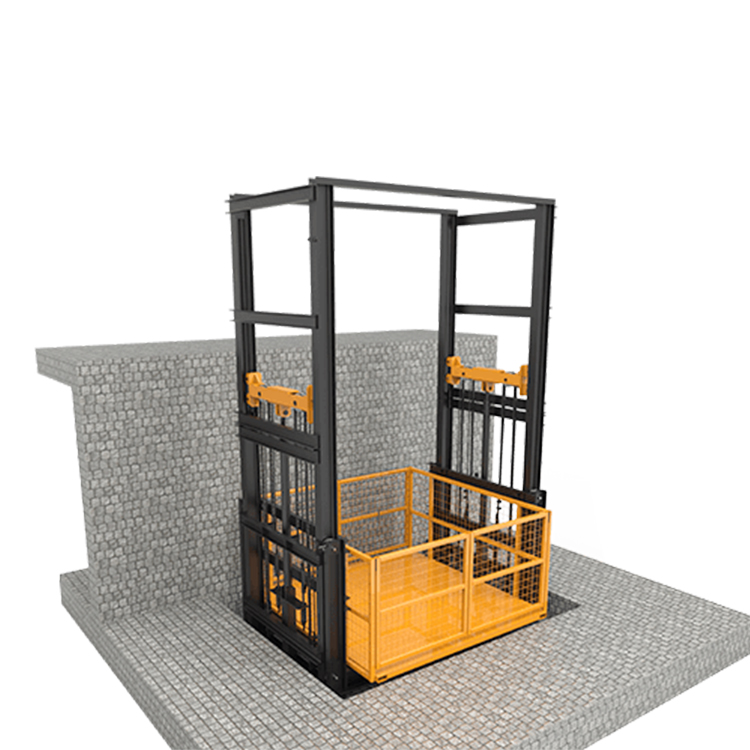
Unlike a standard passenger elevator, the platform can be customized to accommodate forklifts, pallets, carts, crates, machinery, or oversized products.
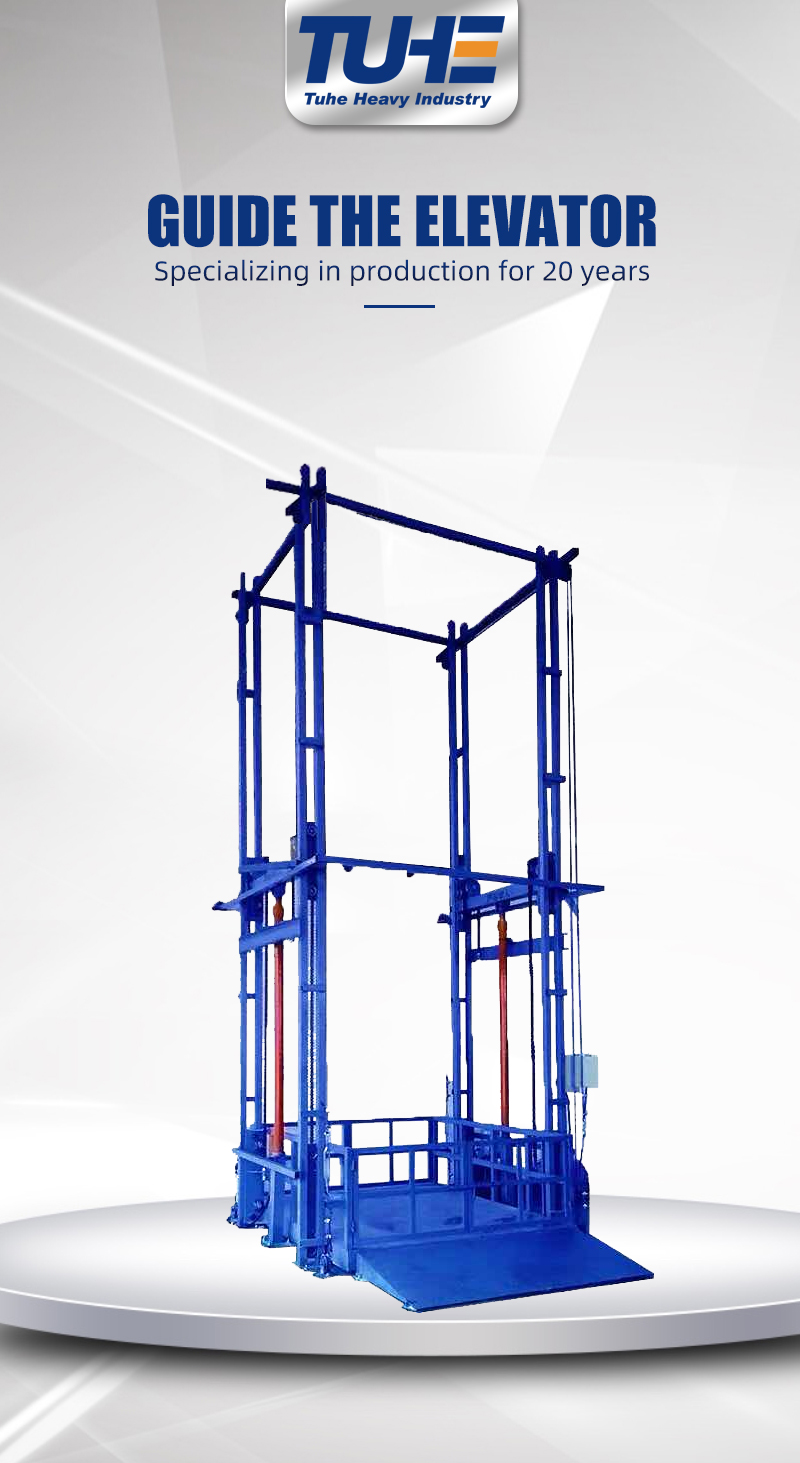
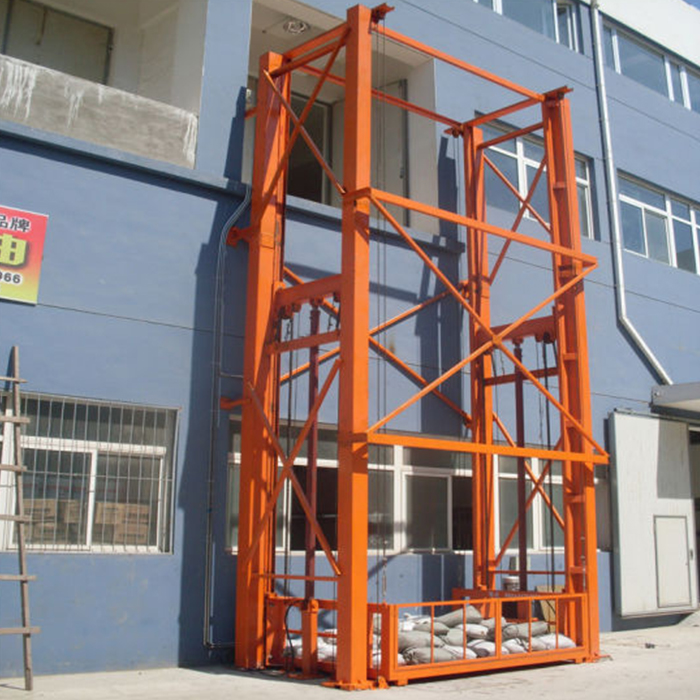
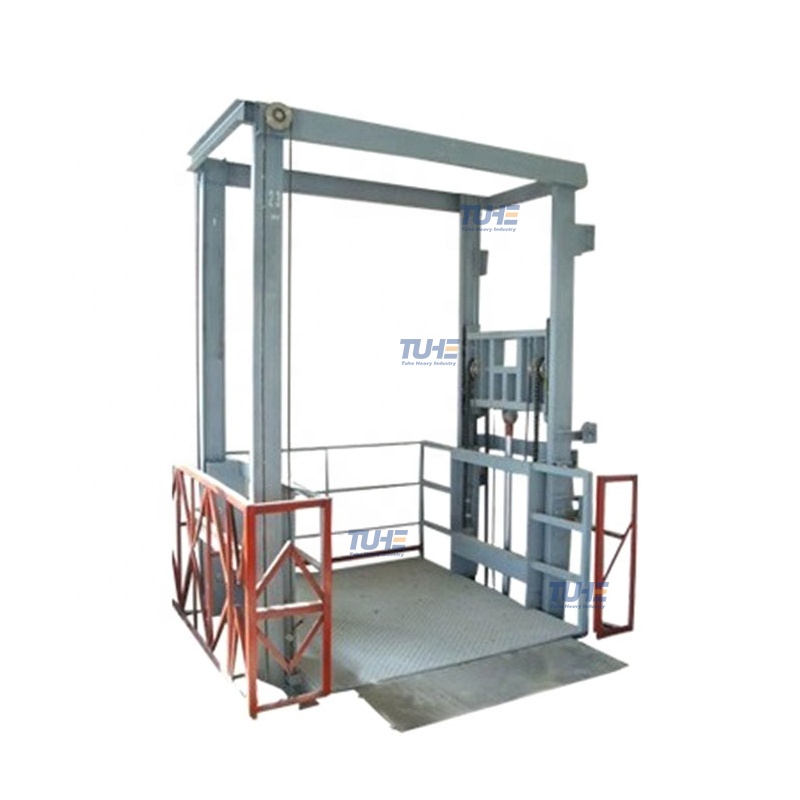
lift can be installed indoors or outdoors according to requirements or installation space.
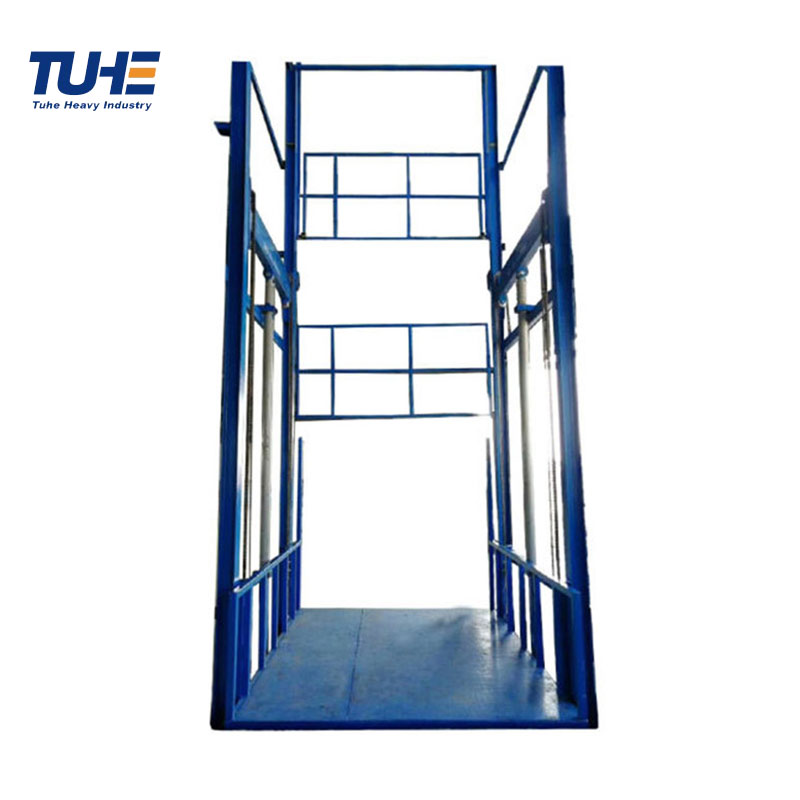
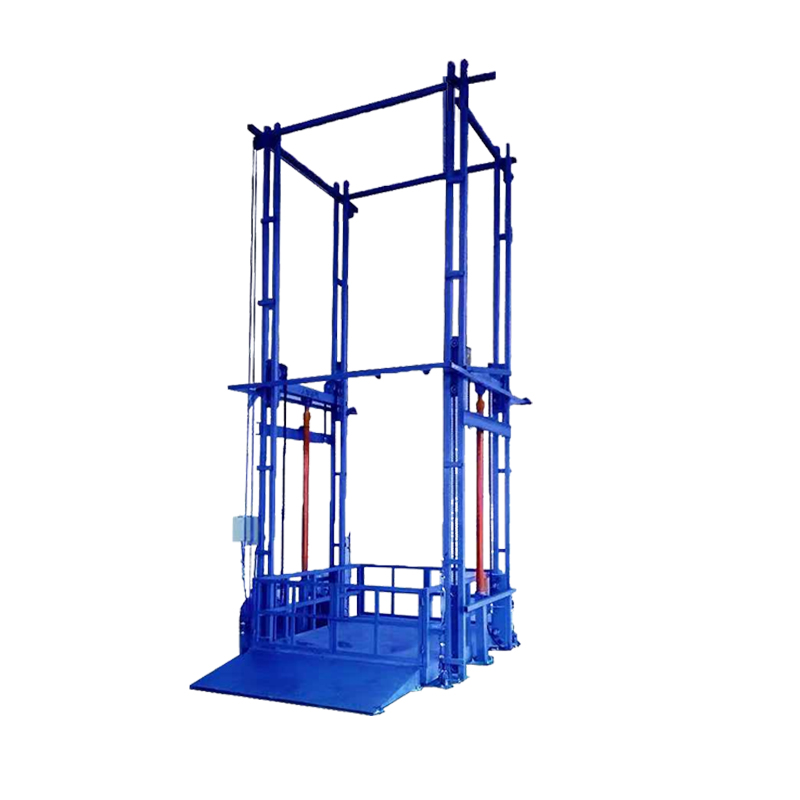
TUHE Cargo lift, load and lifting height can be customized, and the color can also be customized.
What Parts Can Be Customized?
One of the biggest advantages of working with an OEM cargo lift manufacturer is the ability to customize the equipment around the application.
Platform Size
Platform dimensions can be adjusted according to the goods being transported. A larger platform may be required for pallets, forklifts, or oversized machinery, while compact platforms are suitable for limited installation spaces.
Load Capacity
The rated capacity can be engineered according to the customer's requirements. Depending on the application, cargo lifts can be designed for several hundred kilograms to multiple tons.
Load capacity should be determined based on the maximum product weight, pallet weight, handling equipment, and required safety margin.
Lifting Height
Travel height is another important customization parameter. Tuhe Lift can develop solutions according to the vertical distance between loading levels.
The required lifting height directly affects:
Hydraulic cylinder specifications
Guide structure
Platform design
Safety protection
Installation requirements
Number of Stops
A cargo lift can be configured to serve different floors or working levels. For example, a warehouse may require ground-to-second-floor transportation, while a production facility may need multiple loading points.
Hydraulic Power System
The hydraulic power unit can be selected according to load capacity, lifting height, operating frequency, and speed requirements.
Customization may include:
Hydraulic pump
Motor power
Hydraulic cylinder
Valves
Oil tank
Control components
Safety Gates and Doors
Different projects require different access protection. Options may include manual gates, automatic doors, protective barriers, landing gates, and interlocking systems.
Control System
Control configurations can be customized for different operating environments.
Possible options include:
Push-button controls
Wall-mounted controls
Platform controls
Remote controls
Emergency stop buttons
Multi-level control stations
Platform Flooring and Structure
The platform can be customized according to the type of cargo. Anti-slip steel flooring is commonly used for industrial applications where pallets, carts, or machinery are transported.
Finish and Appearance
For OEM projects, customers can also request customized colors, logos, warning labels, control panel layouts, and exterior finishes.
This makes the equipment suitable for both industrial use and branded commercial projects.
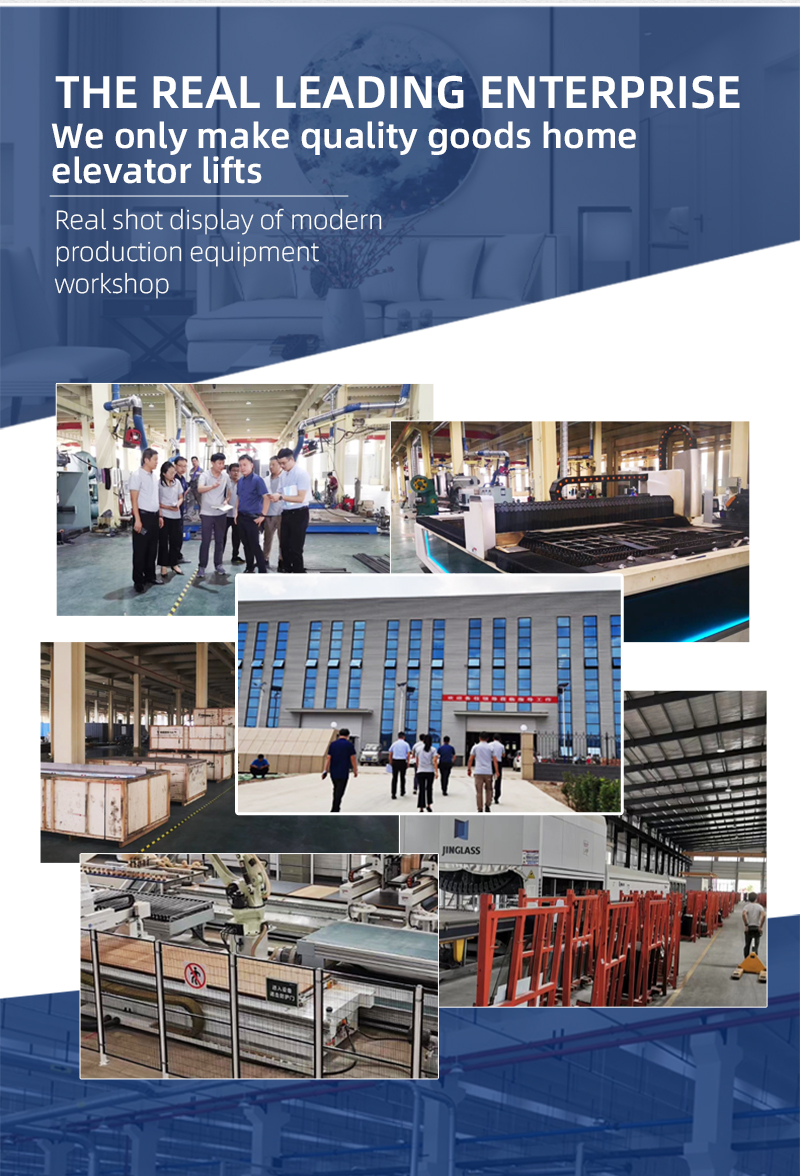
Complete production line, each batch of products will undergo strict quality inspection
Customized cargo lift platform is made of high-strength steel and has various protection mechanisms.
Customized Cargo Lift vs. Standard Passenger Elevator
A cargo lift and passenger elevator may both move vertically, but they are designed for different purposes.
Passenger elevators prioritize passenger comfort, appearance, ride quality, and high-frequency human transportation. Cargo lifts prioritize load capacity, platform strength, accessibility for goods, and industrial durability.
A customized cargo lift is often more suitable when the primary requirement is moving:
Heavy materials
Pallets
Industrial equipment
Construction materials
Carts
Warehouse inventory
Another important difference is the loading method. Cargo platforms can be designed around forklifts, pallet trucks, or other material-handling equipment.
Cargo Lift vs. Scissor Lift
A scissor lift raises a platform using a folding mechanical structure. It is widely used for vertical lifting but may require more structural space below the platform.
A hydraulic vertical cargo lift can provide a more direct vertical transportation solution, particularly where the lift needs to connect fixed floors.
For permanent multi-level material transportation, a platform cargo elevator is often a better fit. For temporary lifting or applications requiring mobility, a scissor lift may be more appropriate.
The right choice depends on travel height, frequency of operation, platform dimensions, load capacity, and installation environment.
Why Choose Tuhe Lift as an OEM Manufacturer?
Tuhe Lift focuses on customized lifting equipment for industrial and commercial applications. Rather than offering only one standard configuration, an OEM manufacturer can adapt the cargo lift to the customer's actual project requirements.
For B2B buyers, this approach provides several advantages.
Project-Based Engineering
The manufacturer can evaluate the required load capacity, lifting height, platform size, number of stops, installation environment, and operating frequency before proposing a suitable configuration.
OEM Customization
Distributors and equipment brands can request customized product specifications, appearance, labels, and packaging according to their market requirements.
Manufacturing Control
Working directly with a manufacturer can simplify communication between engineering, production, and purchasing teams. This is particularly valuable for customized projects where small specification differences can affect installation.
Flexible Solutions
Different industries have different lifting requirements. A warehouse cargo lift may need forklift access, while a factory lift may require larger platforms and higher load capacity.
An OEM manufacturer can adapt the design accordingly.
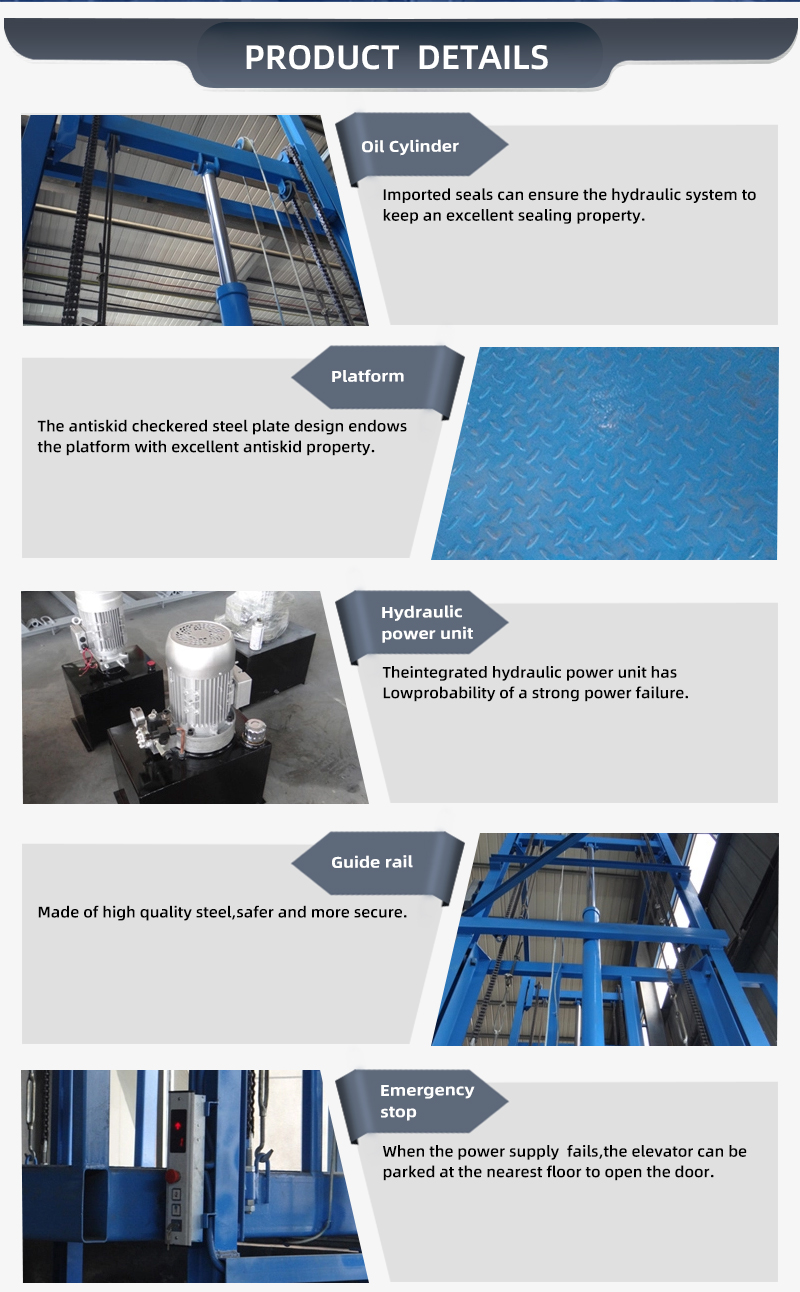
Freight lift elevator manufacturer OEM Every floor install the anti-fall lock to avoid the table subsidence.
Emergency manual valve: machine will slowly falling when suddenly power off or a other emergency.
How to Customize a Cargo Lift Platform Elevator
A successful OEM project should begin with accurate technical information.
Step 1: Define the Application
Explain what the lift will transport and where it will be installed.
Important information includes:
Type of goods
Maximum load
Pallet dimensions
Forklift or trolley access
Indoor or outdoor installation
Operating frequency
Step 2: Confirm Platform Dimensions
Provide the required platform length and width. The platform should be large enough for the cargo while allowing safe loading and unloading.
Step 3: Confirm Lifting Height
Measure the vertical distance between the lowest and highest loading points.
If multiple floors are involved, provide the height of every landing.
Step 4: Select the Lifting System
The manufacturer can recommend a suitable hydraulic configuration according to load capacity, travel height, and usage frequency.
Step 5: Customize Safety Protection
Determine the required gates, barriers, emergency stop system, limit switches, anti-fall protection, overload protection, and other safety devices.
Step 6: Review the Technical Drawing
Before production, the manufacturer should provide technical drawings for confirmation.
Buyers should check:
Platform dimensions
Shaft dimensions
Landing positions
Door locations
Overall height
Installation requirements
Step 7: Confirm OEM Details
For private-label projects, confirm:
Logo
Product color
Nameplate
Warning labels
Packaging
Documentation
Step 8: Production and Quality Inspection
After technical approval, the manufacturer begins production. Before shipment, buyers can arrange factory inspection or third-party inspection to verify specifications and workmanship.
Step 9: Delivery and Installation
The final stage includes transportation, installation, commissioning, and operator training according to the agreed project requirements.
Customer Reviews
⭐⭐⭐⭐⭐ — David M., Germany
Verified Purchase
We needed a customized cargo lift for moving pallets between our warehouse floors. Tuhe Lift adjusted the platform size and loading configuration to match our requirements. Communication was straightforward, and the finished lift operates smoothly.
⭐⭐⭐⭐⭐ — Michael R., United States
Verified Purchase
We purchased a hydraulic platform cargo lift for an industrial project. The OEM customization was important because our available installation space was limited. The manufacturer helped us modify the dimensions and safety gate arrangement. The final equipment fits the project very well.
⭐⭐⭐⭐ — Ahmed K., United Arab Emirates
Verified Purchase
Good experience with Tuhe Lift. We requested a heavy-duty cargo platform with customized lifting height and control points. The factory provided technical drawings before production, which made the installation planning much easier.
Conclusion
A customized cargo lift platform elevator provides an efficient solution for moving heavy goods between different levels in warehouses, factories, logistics centers, workshops, and commercial buildings. Compared with choosing a standard model, OEM customization allows the platform size, load capacity, lifting height, hydraulic system, safety gates, controls, and appearance to be designed around the actual project.
For distributors, engineering companies, industrial users, and equipment brands, working directly with a professional cargo lift platform elevator manufacturer can also improve communication, customization flexibility, and long-term supply capability.
By following a structured customization process—from application analysis and technical specifications to drawing confirmation, manufacturing, inspection, and installation—buyers can obtain a cargo lift that matches their operational requirements rather than adapting their facility to a generic product.


222.webp)